Glock's Slimline family gives buyers several ways to prioritize compact dimensions, grip length, slide length, optics, and accessory compatibility. The Glock 43, 43X, and 48 all share the narrow character associated with the Slimline platform, but they should not be treated as interchangeable when planning upgrades.
The biggest differences appear in the grip and magazine system, slide and barrel length, and whether the pistol uses an MOS configuration. The Glock 43 represents the smallest approach, while the 43X combines a short slide with a longer Slimline grip. The Glock 48 uses the same general full-length Slimline grip concept with a longer slide. MOS versions of the 43X and 48 add another important consideration by providing an optics-ready slide and accessory rail. Understanding those differences before buying parts can prevent one of the most common Slimline mistakes: assuming that anything labeled for a Slimline Glock fits every model.
Start With the Basic Slimline Differences
The easiest way to understand the family is to separate the pistols by grip configuration, slide length, and optics capability.
Glock 43
The Glock 43 uses the shortest grip and compact slide configuration in this group. Its smaller magazine and grip architecture make it a distinct platform for several accessories even though it shares the Slimline name with the larger models.
Glock 43X
The 43X retains a short slide but pairs it with a longer Slimline grip. That changes hand fit, magazine compatibility, and the types of grip-related accessories buyers can use.
Glock 48
The Glock 48 uses the longer grip architecture associated with the 43X but adds a longer slide and barrel. This creates a pistol with similar frame ergonomics but different upper-component requirements.
43X MOS and 48 MOS
MOS versions add an optics-ready slide and a Slimline accessory rail. Those features significantly expand optic and light options compared with non-MOS configurations.
Glock 43: The Most Compact Starting Point
The Glock 43 is the model to evaluate when keeping grip dimensions as short as possible is a major priority. That compactness also means upgrades affecting the magazine and lower grip can create a proportionally larger change to the pistol.
Shorter Grip
The Glock 43 grip provides less vertical space than the 43X and 48. Magazine baseplate shape therefore has a greater influence on how much surface is available to the lower fingers.
Different Magazine System
The Glock 43 does not use the same standard magazine configuration as the 43X and 48. Magazine extensions and baseplates must be selected specifically for the correct magazine.

Compactness Is Its Main Advantage
Adding a substantial magazine extension may improve hand fit for some owners, but it also changes one of the main reasons to choose the Glock 43 in the first place. Buyers should decide how much additional grip length they actually want.
Glock 43X: Short Slide With More Grip
The Glock 43X takes a different approach. Its short slide preserves a compact upper while the longer grip provides more room for the firing hand and supports the larger Slimline magazine format shared with the Glock 48.
More Complete Hand Fit
For many shooters, the longer grip reduces the need to use a magazine extension simply to create room for the little finger.
More Grip-Related Upgrade Options
The shared 43X and 48 frame architecture means many magwells, controls, magazine extensions, and other frame-related accessories can be offered for both pistols.
Carry Dimensions Still Matter
The longer grip is easier for many hands to manage, but it also creates a larger external profile than the Glock 43. Adding a magwell or large magazine extension increases that difference further.
Glock 48: Same Grip Concept, Longer Upper
The Glock 48 shares much of its lower-frame architecture with the 43X but uses a longer slide and barrel. That makes the frame-related upgrade strategy similar while creating important differences above the frame.
Shared Frame Accessories
Many accessories determined by the 43X/48 grip frame can work across both models when the manufacturer specifies compatibility.
Different Slide and Barrel Components
The longer Glock 48 upper means barrels, slides, and other length-dependent components should be purchased specifically for the 48.
Different Overall Balance
The additional slide length places more of the pistol's dimensions forward rather than adding more grip length. Buyers who like the 43X grip but prefer a longer upper may therefore find the 48 a better starting point.
Glock 43 and 43X Are Not the Same Upgrade Platform
The similar names cause considerable confusion. The Glock 43 and 43X share a short-slide concept, but the frame and magazine differences mean buyers should not assume that lower accessories transfer between them.
Magazine Extensions Are Different
An extension designed around a Glock 43 magazine should not automatically be expected to fit a 43X magazine, or vice versa.
Magwells Are Different
The lower grip geometry differs substantially enough that a magwell should always be purchased for the exact supported model.
Control Compatibility Must Be Verified
Even when two controls appear similar, manufacturer fitment should determine whether a specific extended magazine release, slide release, or other component supports the 43, 43X, or both.
The 43X and 48 Share More Accessories
The 43X and 48 have much more in common below the slide. This is where buyers will see the greatest amount of accessory crossover within the Slimline family.
Shared Grip Architecture
The similar frame configuration allows many grip-related components to support both models.
Shared Magazine Format
The 43X and 48 use the same standard Slimline magazine format, which is why compatible magazine extensions and baseplates are commonly listed for both models.
Shared External Controls
Many frame-mounted control upgrades are also offered with combined 43X/48 compatibility, although buyers should still check the exact manufacturer's fitment statement.
Slide and Barrel Upgrades Separate the 43X From the 48
Once the upgrade moves from the frame to the upper assembly, the similarities between the 43X and 48 become less important.
43X Uses the Shorter Upper
The 43X uses the shorter Slimline slide and barrel configuration. Replacement upper components should match that geometry.
48 Uses a Longer Upper
The Glock 48's additional slide and barrel length requires model-specific upper components.
Do Not Shop for Upper Parts by Frame Compatibility
A magwell may support both the 43X and 48 while a barrel does not. Buyers should identify whether an accessory interfaces with the frame, magazine, or upper before assuming cross-model compatibility.
What MOS Changes on the Glock 43X and 48
The MOS designation matters because it changes the accessory possibilities around the slide and dust-cover area. A 43X MOS or 48 MOS should not simply be treated as a standard model with an optic added later.
Factory Optics-Ready Slide
The Slimline MOS configuration provides a factory-cut slide intended for compatible micro-optics. Buyers therefore have a direct factory mounting architecture to consider when selecting a sight.
Slim Accessory Rail
MOS Slimline frames also include an accessory rail, creating additional options for compatible compact lights and other supported rail-mounted accessories.
Holster Requirements Change
Once an optic or weapon light is added, holster compatibility becomes more specific. The holster needs to accommodate the exact model, slide length, optic configuration, and light when applicable.
MOS Does Not Mean Every Optic Fits
The MOS name can create another common buying mistake. An optics-ready Glock still requires an optic and mounting arrangement that matches the specific Slimline MOS interface.
Slimline MOS Is Designed Around Compact Optics
The narrow slide favors micro-reflex optics with appropriately sized mounting footprints rather than full-size pistol optics that were designed around wider slides.
Check the Mounting Interface
Buyers should verify the optic footprint and any required mounting hardware before purchasing. “Fits Glock MOS” is not specific enough because Glock offers MOS systems across pistols with different slide dimensions.
Consider the Complete Sight Setup
Optic body dimensions, iron-sight visibility, mounting height, and holster clearance should all be evaluated together.
Magazine Extensions: 43 vs 43X and 48
Magazine extensions are one of the easiest places to buy the wrong Slimline component because the products may look similar while being designed around different magazines.
Glock 43 Extensions
Extensions for the Glock 43 must match the smaller Glock 43 magazine configuration. They can also make a noticeable difference to hand fit because the factory grip is shorter.
Glock 43X and 48 Extensions
The 43X and 48 share their magazine format, so extensions designed and verified for those magazines can commonly be used on either pistol.
Consider Grip Length Before Adding More
The 43X and 48 already provide a longer grip than the 43. A large extension may therefore be chosen primarily for its magazine configuration or handling characteristics rather than simply to provide room for the lower finger.
Magazine Baseplates Can Change the Character of Each Model
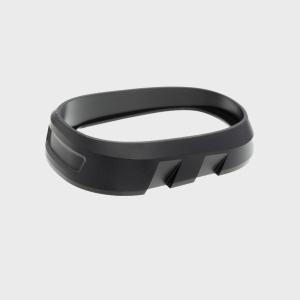
A baseplate is a relatively small accessory, but on a Slimline pistol it sits at one of the most important areas for both concealability and hand fit.
On the Glock 43
Baseplate shape can have a noticeable influence on the effective lower-grip profile. A modest extension can make the pistol feel larger in the hand while also increasing its carried dimensions.
On the 43X and 48
The longer grip already provides more hand space, allowing buyers to focus more on magazine handling, capacity configuration, and compatibility with a magwell.
Keep Carry Goals in Mind
Large basepads can reduce some of the dimensional advantage of choosing a Slimline Glock. The added size should provide a clear benefit.
Magwell Compatibility Is Mostly a Frame Question
A magwell interfaces with the bottom of the grip, making frame geometry more important than slide length.
Glock 43 Requires Its Own Fitment
The shorter and different grip configuration means buyers need a magwell specifically designed for the Glock 43 if one is available for their intended setup.
43X and 48 Commonly Share Magwell Fitment
Because the 43X and 48 share the same general grip frame architecture, many compatible magwells are designed for both models.
Check Magazine Baseplates Too
Even after confirming frame compatibility, make sure the intended magazine baseplate or extension provides adequate clearance with the installed magwell.
Extended Magazine Releases Need Model-Specific Verification
An extended magazine release can change how easily the control is reached without significantly altering the overall pistol, making it a popular ergonomic upgrade for Slimline builds.
Do Not Assume All Slimline Releases Are Identical
Verify whether the product is intended for the Glock 43, the 43X/48 platform, or a combination explicitly listed by the manufacturer.
Carry Profile Matters
A release should provide enough additional surface to improve thumb access without protruding unnecessarily from a pistol chosen specifically for its narrow dimensions.
Recheck Holster Clearance
After changing the release, make sure the holster does not place unwanted pressure against the control when the pistol is fully seated.
Extended Slide Releases Follow the Same Compatibility Rule
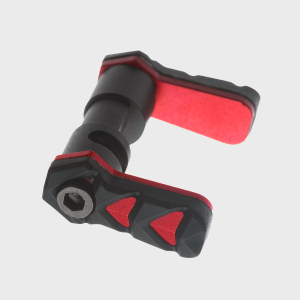
The slide release is another small control where an upgrade can provide a noticeable ergonomic change without requiring a larger grip.
Check the Exact Supported Models
Use the manufacturer's fitment list rather than assuming that a control fitting one Slimline pistol automatically fits the others.
Keep the Profile Proportional
A carry-focused Slimline pistol benefits from controls that provide usable additional surface without becoming unnecessarily prominent.
Evaluate Hand Contact
Hand size and thumb position determine whether additional control surface is actually useful. An extended component should solve an accessibility issue rather than simply add another aftermarket part.
Trigger Compatibility Also Requires Exact Fitment
The Slimline family has dedicated aftermarket trigger options, but buyers should resist treating the entire Glock catalog as interchangeable.
Slimline Triggers Are a Separate Category
A trigger designed for full-size Glock frames should not be assumed to work with a Slimline pistol.
Check 43, 43X, and 48 Listings Carefully
Some Slimline trigger systems are designed to support multiple models, but that compatibility should be explicitly stated.
Carry Builds Benefit From Conservative Selection
For a pistol intended for everyday carry, compatibility and dependable operation should remain more important than choosing an upgrade solely for appearance.
Holster Fit Is Different Across the Slimline Family
Holsters are another category where similar frame widths do not guarantee interchangeability.
Glock 43 vs 43X
The grip and frame differences can affect holster compatibility even though the pistols share a similarly compact upper concept.
43X vs 48
The Glock 48's longer slide means closed-bottom or closely molded holsters may require a dedicated 48 configuration. Some open-bottom designs may support both, but compatibility should be confirmed rather than assumed.
MOS and Weapon-Light Configurations
An optic cut and accessory rail create additional variables. Once a weapon light is installed, the holster needs to support that exact light and pistol combination.
Which Slimline Model Makes the Most Sense for Maximum Compactness?
The Glock 43 is the strongest fit when keeping both the grip and overall package small is the primary objective.
Preserve the Short Grip
Large magazine extensions can move the pistol away from that goal, so buyers should be selective about lower-grip accessories.
Prioritize Subtle External Upgrades
Carefully sized controls and magazine baseplates can refine the pistol without substantially changing its compact dimensions.
Build Around the Reason You Chose the 43
If a buyer continually adds length and bulk to make the Glock 43 feel like a larger pistol, starting with a 43X may ultimately make more sense.
Which Slimline Model Makes the Most Sense for More Grip?
The 43X provides the shorter upper configuration while offering the longer grip shared with the 48.
Fuller Hand Contact
The longer grip gives many shooters enough space for the entire firing hand without requiring an extended baseplate.
Strong Frame-Accessory Ecosystem
Shared 43X/48 compatibility creates numerous options for magazine extensions, magwells, controls, and other external upgrades.
MOS Adds More Accessory Flexibility
Choosing the 43X MOS adds factory optic capability and an accessory rail while preserving the shorter slide configuration.
Which Slimline Model Makes the Most Sense for a Longer Slide?
The Glock 48 is the natural choice for buyers who like the longer Slimline grip but prefer additional slide and barrel length.
Same General Lower Upgrade Strategy as the 43X
Many frame and magazine accessories can be shared between the two when specifically listed as compatible.
Upper Components Remain 48-Specific
Barrels, slides, and other length-dependent accessories need to match the Glock 48 configuration.
48 MOS Expands the Setup Further
The MOS version combines the longer upper with factory micro-optic capability and the Slimline accessory rail.
Should You Buy the MOS Version?
If an optic or rail-mounted accessory is already part of the plan, starting with an MOS model can simplify the build because those features are integrated into the factory configuration.
MOS Makes Sense for Optic Plans
A buyer who already expects to use a compatible micro-optic has a clear reason to consider the 43X MOS or 48 MOS.
The Accessory Rail Adds Another Difference
The rail provides mounting capability for compatible Slimline lights and other supported accessories, which can be important when planning the complete carry setup.
Non-MOS Still Makes Sense for Simpler Builds
If the goal is a streamlined pistol using conventional sights and no rail-mounted accessory, the additional MOS features may not be essential to the intended configuration.
A Simple Upgrade Compatibility Strategy
Instead of memorizing every individual part, buyers can reduce mistakes by identifying which area of the pistol the accessory interfaces with.
Magazine or Lower-Grip Accessory
First determine whether you have a Glock 43 magazine system or the shared 43X/48 format.
Frame Control
Check the manufacturer's exact model list even when the component looks similar across the Slimline family.
Slide or Barrel Component
Treat upper components as model-specific unless compatibility is explicitly stated.
Optic, Light, or Holster
Identify whether the pistol is standard or MOS, then verify the exact optic, accessory rail, weapon light, and slide-length configuration involved.
What to Double-Check Before Buying Slimline Upgrades
A short compatibility review can prevent most incorrect purchases.
Exact Model
Confirm whether the pistol is a Glock 43, 43X, or 48.
Standard or MOS
For 43X and 48 buyers, identify whether the pistol uses the standard or MOS configuration before selecting optics, rail accessories, or holsters.
Magazine Platform
Do not mix Glock 43 magazine accessories with 43X/48 magazine accessories unless the manufacturer specifically states compatibility.
Slide Length
Remember that the 43X and 48 may share many lower accessories while requiring different barrels, slides, and slide-length-dependent equipment.
Complete Carry Configuration
Finally, check how the selected grip accessories, baseplates, controls, optic, light, and holster work together instead of evaluating each component separately.
Did You Know?
The Glock 43X and Glock 48 share the same general grip and magazine architecture, which is why many frame-mounted controls, magwells, and magazine accessories support both models, while their different slide and barrel lengths make many upper components model-specific.
Conclusion
Choosing between the Glock 43, 43X, 48, and Slimline MOS configurations becomes easier once buyers separate grip-related upgrades from upper and optics-related components. The Glock 43 provides the smallest grip and uses its own magazine configuration, while the 43X adds a longer grip without moving to the longer Glock 48 upper. The 43X and 48 share many frame and magazine accessories, but their slide and barrel components should be treated separately. MOS versions add factory micro-optic capability and an accessory rail, which also changes light and holster considerations. Before buying any upgrade, verify the exact model, magazine system, slide length, and MOS status rather than relying on the broad Slimline label. To explore compatible parts for these platforms, visit Tyrant CNC Glock components.
FAQs
Do the Glock 43 and Glock 43X use the same magazines?
No. The Glock 43 uses a different magazine and shorter grip configuration from the 43X. Magazine extensions and baseplates should be purchased for the exact magazine platform.
Do the Glock 43X and Glock 48 use the same magazines?
Yes. The 43X and 48 share the same standard Slimline magazine format, which is why many compatible magazine extensions and baseplates are offered for both pistols.
Do Glock 43X and Glock 48 accessories interchange?
Many frame-mounted controls, magazine accessories, and magwells can support both because the pistols share the same general grip architecture. Barrels, slides, and other components affected by upper length are different and should be purchased for the specific model.
What is different about the Glock 43X MOS and Glock 48 MOS?
The MOS configurations add a factory optics-ready slide and Slimline accessory rail. This expands micro-optic and compatible rail-mounted accessory options while also creating additional holster-fit considerations.
Should I choose a Glock 43, 43X, or 48 if I plan to add upgrades?
Choose the base pistol according to the dimensions and hand fit you actually want. The Glock 43 prioritizes minimum size, the 43X combines a short upper with a longer grip, and the 48 pairs that longer grip with a longer slide. After choosing the platform, select upgrades specifically for that configuration rather than trying to make one model imitate another.