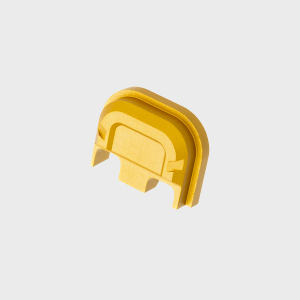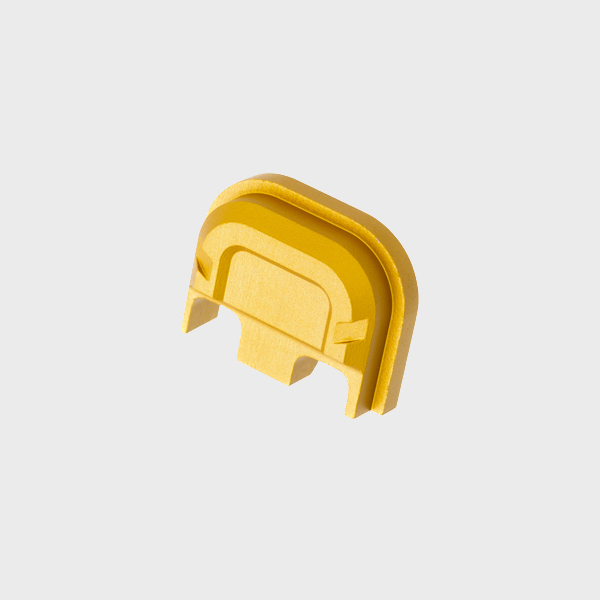
The slide cover plate is one of the smallest visible components on a Glock 19 or Glock 17, but its location gives it an important role in the rear of the slide assembly. That makes an aluminum replacement different from a purely decorative accessory. The part needs the correct dimensions, generation compatibility, edge geometry, and fit so it can occupy the factory location without interfering with surrounding components.
CNC machined aluminum slide cover plates are popular because they provide a rigid metal replacement with a wide range of finishes and visual designs while adding very little external bulk. The important distinction is that a good cover plate should not rely on excessive force to remain in position. Proper fit comes from correct geometry and the surrounding factory retention system. Because replacing the plate involves disassembly beyond Glock's standard field-stripping procedure, owners should also understand the safety and warranty considerations before making the change.
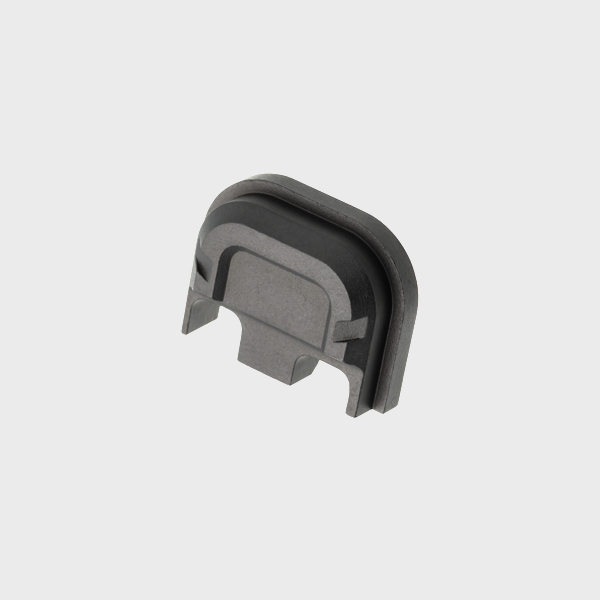
What the Glock Slide Cover Plate Actually Does
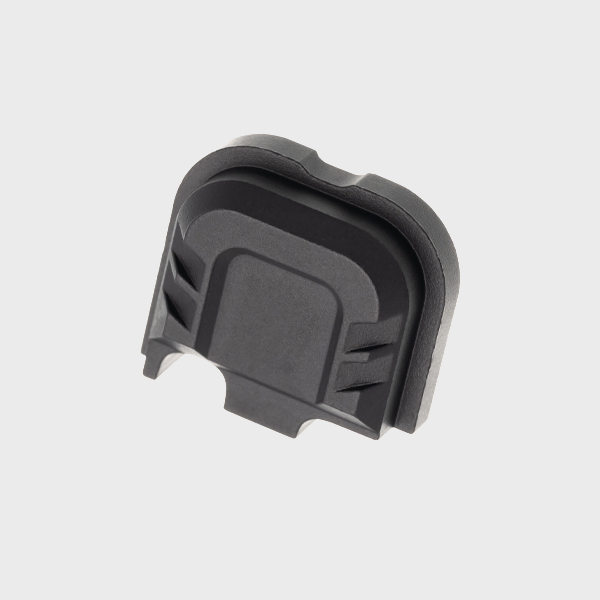
The slide cover plate closes the rear opening of the slide and sits alongside components associated with the firing pin and extractor assemblies. It therefore occupies a functional location even when an aftermarket version is selected primarily for appearance.
It Closes the Rear of the Slide
The plate forms the visible rear surface beneath the rear sight area. A properly fitted replacement should sit in the intended position without excessive gaps, obvious movement, or unusual protrusion.
It Interfaces With Internal Components
The firing pin assembly and extractor depressor plunger assembly are located immediately forward of the cover plate. That relationship is why replacing the plate requires more care than swapping an external magazine baseplate or similar accessory.
It Is Not Just a Decorative Insert
Color and engraving may be the most visible reasons to change the plate, but dimensional accuracy remains more important than appearance.
Why Aluminum Is Popular for Glock Cover Plates
Aluminum is well suited to small external firearm components because it combines low weight, rigidity, machinability, and extensive finishing options.
Low Weight
A slide cover plate is already a small component, so changing from polymer to aluminum does not dramatically alter the pistol's overall weight or balance.
CNC Machining Allows Precise Geometry
Machining allows the edges, grooves, exterior surface, and other features to be produced around defined dimensions rather than treating the component as a generic decorative plate.
Anodized Finishes Add Customization
Aluminum can be anodized in different colors, making the cover plate an easy place to coordinate the appearance of a Glock with other external controls or accessories.
Understanding the Idea of a Tension Fit
The phrase “tension fit” can create the impression that a cover plate should be extremely tight inside the slide. That is not the goal. The plate should fit the intended slide geometry correctly while working with the pistol's existing retention system.
Correct Fit Should Feel Controlled
The replacement should align with the slide's cover-plate channel and reach its intended seated position without requiring destructive force.
Tighter Is Not Automatically Better
A plate that requires excessive force can indicate incorrect dimensions, incompatible generation fitment, surface damage, debris, or another issue that should be investigated rather than overcome with additional pressure.
Loose Is Not Better Either
A plate that visibly shifts, fails to remain properly positioned, or does not interact correctly with the surrounding assembly should not be considered acceptable simply because it slides into the channel easily.
The Retention System Matters More Than Friction Alone
A Glock slide cover plate is not intended to stay in place solely because the plate has been wedged tightly into the rear of the slide.
Internal Components Contribute to Retention
The surrounding firing pin and extractor-related assemblies interact with the rear portion of the slide. Correct assembly allows the cover plate to occupy its intended position as part of that system.
Do Not Try to Create Artificial Tightness
Adhesive, improvised shims, deformation, or other attempts to make an incompatible plate fit more tightly are not substitutes for correct dimensions.
Use a Plate Designed for the Exact Configuration
Model and generation compatibility should be established before evaluating how tightly the component fits.
Glock 17 and Glock 19 Compatibility Depends on Generation
Glock 17 and Glock 19 pistols share many design characteristics, but owners should not assume that every slide cover plate marketed for one generation fits every other generation.
Gen 3 and Gen 4
Many aftermarket cover plates are offered across compatible Gen 3 and Gen 4 configurations, but the manufacturer's fitment list should still be checked rather than relying on visual similarity.
Gen 5
Gen 5 introduced changes to several internal components. Cover-plate compatibility should therefore specifically include the Gen 5 Glock 17 or Glock 19 when used on those pistols.
Newer Glock Configurations Need Exact Verification
As Glock platforms continue to evolve, buyers should use the current manufacturer's compatibility information rather than assuming a plate designed around an earlier generation will remain universal.
Why Gen 5 Cover Plate Compatibility Is Especially Important
One clear example of generation-specific cover plate requirements can be seen with Glock's own Performance Trigger. Glock specifies that when the Performance Trigger is used in compatible Gen 4 pistols, a Gen 5 slide cover plate must also be installed for proper compatibility.
The Exterior Can Look Similar While Internal Geometry Differs
The visible rear face tells only part of the story. Features on the inside of the cover plate can determine whether it works correctly with the surrounding components.
Do Not Buy Based on Exterior Dimensions Alone
A plate can appear to match the rear of the slide while still being intended for a different internal configuration.
Read the Complete Fitment Description
Look for explicit references to Glock 17, Glock 19, and the applicable generation rather than accepting a generic “fits Glock” description.
Glock 19X, G45, and Related Models Need Their Own Fitment Check
Owners sometimes group several standard-width Glock pistols together because of their shared design architecture. That does not eliminate the need for model-specific verification.
Shared Architecture Does Not Guarantee Universal Parts
Even when models share major components or belong to the same generation, an aftermarket manufacturer may approve its cover plate for only a specific range of configurations.
Follow the Plate Manufacturer's Compatibility List
If a model is not listed, confirm compatibility before attempting installation.
Do Not Force a Similar-Looking Plate
Visual similarity is not enough to establish correct internal fit.
Slimline Glock Cover Plates Are a Separate Category
The Glock 43, Glock 43X, and Glock 48 belong to the Slimline family and should not automatically be included when a product lists Glock 17 and Glock 19 compatibility.
Standard-Width and Slimline Slides Differ
The narrower architecture changes the dimensions of several components, including parts around the rear of the slide.
Do Not Assume a Glock 19 Plate Fits a Glock 43X
A product intended for standard-width Glock slides should not be installed on a Slimline pistol unless the manufacturer explicitly lists that model.
Buy by Exact Model Family
Separating standard-width and Slimline components is one of the easiest ways to avoid compatibility mistakes.
MOS Does Not Automatically Change the Cover Plate Requirement
Glock MOS primarily changes the optic-mounting area on the upper portion of the slide. The rear slide cover plate remains a separate component.
Optic Cover Plate and Slide Cover Plate Are Different Parts
The MOS optic cover plate closes the optic cut when a red dot is not installed. The slide cover plate closes the rear of the slide. These names should not be confused when shopping for replacement components.
Verify the Generation First
For a Glock 19 MOS or Glock 17 MOS, generation compatibility remains an important part of selecting the rear slide cover plate.
Do Not Use MOS Hardware Specifications for the Rear Plate
The rear slide cover plate is not installed with the screws used for Glock's optic cover or MOS adapter plates.
What Good Aluminum Cover Plate Fit Should Look Like
A properly matched aluminum plate should look intentional when seated in the rear of the slide.
Even Alignment
The exterior face should align appropriately with the rear-slide geometry rather than sitting visibly crooked.
No Obvious Unintended Movement
The component should remain in its intended position once the pistol is correctly assembled.
No Excessive Protrusion
A standard replacement plate should not unexpectedly extend beyond the rear-slide profile unless that additional geometry is an intentional feature of the product.
No Need for Improvised Modification
A correctly specified component should not require filing, bending, hammering, or improvised shimming simply to make it fit a supported Glock model.
What an Overly Tight Cover Plate Can Indicate
Resistance alone does not prove that a plate is high quality. Excessive resistance can indicate a compatibility or condition problem.
Wrong Generation
The replacement may not match the internal geometry required by the pistol.
Incorrect Model Family
A Slimline and standard-width plate can look conceptually similar while being dimensionally different.
Debris or Surface Damage
Foreign material, damaged edges, or deformation around the plate channel can prevent normal fit.
Out-of-Spec Component
If a plate specifically listed for the pistol cannot seat correctly, the component should be inspected rather than forced into place.
Why Installation Safety Matters
The rear slide cover plate is adjacent to internal components associated with the firing mechanism. Glock's owner guidance therefore draws a clear distinction between ordinary field stripping and deeper slide disassembly.
Field Stripping Has Defined Limits
Glock describes routine field stripping as separating the pistol into its major assemblies for cleaning and inspection.
Cover Plate Replacement Goes Beyond Basic Field Stripping
Removing the rear plate exposes components that Glock does not include in routine owner-level disassembly.
Glock Directs Further Disassembly to Certified Armorers
Glock's current owner guidance states that disassembly beyond the normal field-stripping procedure should be performed by a Glock-Certified Armorer. That makes professional installation the appropriate approach for owners who are not trained to service the rear-slide assembly.
Start With an Unloaded Firearm
Any inspection, maintenance, or parts work should begin with basic firearm safety rather than with the replacement component.
Remove the Magazine
The magazine should be removed before beginning maintenance or inspection.
Confirm the Chamber Is Empty
The firearm should be positively verified as unloaded according to the manufacturer's safety procedure.
Keep Ammunition Away From the Work Area
Separating ammunition from the maintenance area reduces the possibility of accidentally introducing live ammunition during parts work.
Do Not Treat the Rear Slide Assembly Like an External Accessory
Changing a grip plug or cosmetic external accessory is different from opening the rear of the Glock slide.
Spring-Loaded Components Are Present
The rear slide assembly contains components under spring tension. Incorrect handling can allow parts to move unexpectedly or become damaged.
Internal Orientation Matters
The components behind the cover plate need to remain in their intended positions for the pistol to function as designed.
Professional Installation Avoids Guesswork
If there is uncertainty about the correct plate, generation, internal condition, or reassembly, a Glock-Certified Armorer can inspect the complete system rather than relying on trial and error.
Do Not Force an Aluminum Plate Into Position
Aluminum is rigid enough that forcing an incompatible component into the slide can damage either the replacement plate, its finish, or surrounding surfaces.
Stop if the Part Does Not Align Correctly
Unexpected resistance should trigger another compatibility check rather than additional force.
Avoid Hammering the Plate Into Place
A cover plate should not require aggressive impact to overcome an obvious dimensional mismatch.
Do Not File the Plate Without Understanding the Problem
Removing material changes the dimensions of a precision component. If a supposedly compatible plate does not fit, confirm the part and pistol specifications before modifying anything.
Aluminum vs Factory Polymer Cover Plates
Moving from a factory polymer plate to a CNC machined aluminum version primarily changes material, appearance, and surface feel rather than transforming the function of the pistol.
Aluminum Provides a Rigid Metal Surface
A machined plate has a different tactile and visual character from the factory polymer component.
Polymer Remains Lightweight and Functional
The factory component already performs its intended job, so aluminum should be viewed as an optional customization rather than a required reliability upgrade.
Material Does Not Replace Correct Geometry
An accurately fitted polymer plate is preferable to an incorrectly dimensioned aluminum one. CNC machining is valuable when it produces the correct dimensions and repeatable fit.
Aluminum vs Steel Slide Cover Plates
Both metals can be used for aftermarket cover plates, but their properties differ.
Aluminum Keeps Weight Extremely Low
Because the component is small, the practical weight difference is limited, but aluminum remains the lower-density metal option.
Steel Provides Greater Density and Hardness
A steel plate has a different material feel and can support different finishing methods.
Fit Matters More Than Material
For either metal, correct generation-specific geometry should be the first purchasing criterion.
Finish Quality Matters on Aluminum Parts
An aluminum cover plate is exposed at the rear of the slide, so its finish contributes directly to the appearance of the pistol.
Anodizing
Anodizing creates a controlled oxide layer on the aluminum surface and allows manufacturers to offer different color options.
Machined Details
CNC machining can incorporate grooves, logos, patterns, or other decorative features directly into the exterior face.
Normal Wear Can Still Occur
Metal-to-metal contact and regular handling can eventually produce visible marks on finished aluminum surfaces. Cosmetic wear does not automatically indicate a structural problem.
A Cover Plate Should Not Be Used to Add Excessive Rear Leverage
Some aftermarket rear plates incorporate enlarged external surfaces. These should be distinguished from conventional low-profile aluminum replacement plates.
Standard Replacement Plates Stay Close to Factory Dimensions
For owners primarily interested in color or material, a low-profile plate preserves the original rear-slide shape.
Extended Designs Change the External Interface
A plate with a large projection can affect how the rear of the slide interacts with holsters, clothing, or other equipment.
Choose the Design for Its Intended Purpose
A conventional aluminum cover plate is usually the cleaner option when the goal is simply to add a machined accent without changing the pistol's external dimensions substantially.
Check the Plate During Routine Inspection
After any replacement component is installed by a qualified person, the plate should become part of normal visual inspection.
Look for Proper Seating
The plate should remain in its intended position at the rear of the slide.
Watch for Unusual Movement
Visible movement or a plate that no longer appears correctly seated should be inspected before continued use.
Inspect the Finish Separately From Fit
Minor cosmetic marks and actual movement are different issues. Evaluate whether observed wear is simply finish wear or evidence that the component is not sitting correctly.
Do Aftermarket Cover Plates Affect Glock Warranty Coverage?
Warranty considerations should be checked before changing factory components. Glock states that altering or modifying a pistol or its parts can negatively affect functionality and safety and may affect warranty coverage.
Do Not Assume Every Cosmetic Upgrade Is Warranty Neutral
The small size of the component does not automatically make the modification irrelevant to the manufacturer's warranty policy.
Installation Method Matters
Glock's owner instructions state that further disassembly beyond normal field stripping should be performed by a Glock-Certified Armorer.
Check Current Manufacturer Guidance
Warranty policies and product instructions should be reviewed for the exact pistol before modification rather than relying on assumptions based on another model or generation.
Common Slide Cover Plate Upgrade Mistakes
Most problems can be avoided by treating the plate as a generation-specific firearm component instead of a universal decorative insert.
Buying a Generic “Glock” Plate
Confirm exact Glock 17 or Glock 19 generation compatibility before purchasing.
Confusing the Rear Plate With an MOS Optic Cover Plate
These are separate components in different areas of the slide.
Assuming the Tightest Plate Is the Best Plate
Correct geometry and retention matter more than creating excessive friction.
Forcing an Incompatible Component
If the plate does not align and seat as intended, stop and verify fitment.
Ignoring Internal Safety Considerations
The plate sits directly beside spring-loaded firing-system components, so replacement should not be approached like changing an external cosmetic accessory.
Assuming Every Generation Is Identical
Internal differences make explicit generation compatibility important even when the exterior plate shape appears similar.
What to Check Before Buying an Aluminum Glock Cover Plate
A short compatibility review can prevent most fitment problems.
Exact Model
Confirm Glock 17, Glock 19, or another specifically supported model.
Generation
Check Gen 3, Gen 4, Gen 5, or the applicable newer configuration rather than assuming cross-generation compatibility.
Standard-Width or Slimline
Do not mix components intended for standard Glock slides with Glock 43, 43X, or 48 Slimline parts.
Material
If aluminum is preferred, look for a precisely machined component with a durable finish rather than choosing solely by color.
External Profile
Decide whether the goal is a factory-like low-profile replacement or a design with an intentionally larger rear surface.
Manufacturer Fitment Information
Use the product's explicit compatibility list as the primary reference rather than assuming that visually similar Glock slides use identical plates.
When to Have the Pistol Inspected
There are several situations where professional inspection is more appropriate than continuing to troubleshoot the plate.
The Plate Will Not Seat Correctly
A supposedly compatible component that cannot reach its intended position may indicate incorrect fitment, damage, debris, or another issue.
The Plate Moves After Installation
Unexpected movement should be investigated rather than corrected with improvised adhesives or modifications.
Internal Components Appear Damaged or Misaligned
Because the cover plate is adjacent to firing-system components, uncertainty about internal condition is a reason to stop and have the pistol inspected.
You Are Unsure About Generation Compatibility
A qualified Glock armorer can identify the configuration and determine whether the replacement component is appropriate before it is installed.
Did You Know?
Glock identifies the rear component as the slide cover plate in its parts documentation, and the company's owner guidance treats removal beyond normal field stripping as armorer-level disassembly rather than routine owner maintenance.
Conclusion
A CNC machined aluminum slide cover plate can give a Glock 19 or Glock 17 a distinctive metal accent without adding meaningful bulk, but proper fit is more important than color or engraving. The plate should match the exact model and generation, align correctly with the slide, and work with the factory retention system rather than depending on excessive friction or improvised modifications. Gen 3, Gen 4, Gen 5, Slimline, and newer Glock configurations should not be assumed to use identical parts simply because their rear-slide profiles look similar. Because replacing the slide cover plate involves components beyond Glock's normal field-stripping procedure, owners should follow current manufacturer guidance and use a Glock-Certified Armorer when appropriate. To explore compatible Glock upgrade options, visit Tyrant CNC Glock components.
FAQs
Are Glock 17 and Glock 19 slide cover plates interchangeable?
Many cover plates are designed to support both models within specified generations, but compatibility should never be assumed from the model names alone. Check the manufacturer's exact model and generation fitment list.
Should an aluminum Glock slide cover plate fit extremely tightly?
No. The goal is correct dimensional fit and proper retention, not maximum friction. Excessive resistance can indicate incompatible geometry, debris, damage, or an out-of-spec component and should not simply be overcome with additional force.
Does a Glock Gen 5 use the same slide cover plate as earlier generations?
Not in every configuration. Internal changes can affect cover plate requirements, and Glock's own Performance Trigger documentation provides an example where a Gen 5 cover plate is specifically required when the trigger is installed in compatible Gen 4 pistols. Always verify the exact replacement part.
Is the rear slide cover plate the same as the Glock MOS optic cover plate?
No. The rear slide cover plate closes the rear of the slide near the firing pin and extractor-related assemblies. The MOS optic cover plate sits over the optic cut on top of an MOS slide when an optic is not installed.
Can I replace a Glock slide cover plate during normal field stripping?
Cover plate replacement goes beyond the basic field-stripping procedure described in Glock's owner guidance. Glock directs further disassembly to Glock-Certified Armorers, so owners who are not appropriately trained should use a qualified armorer for the replacement.