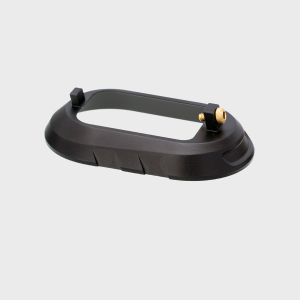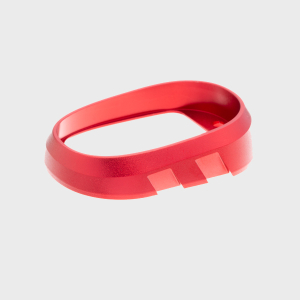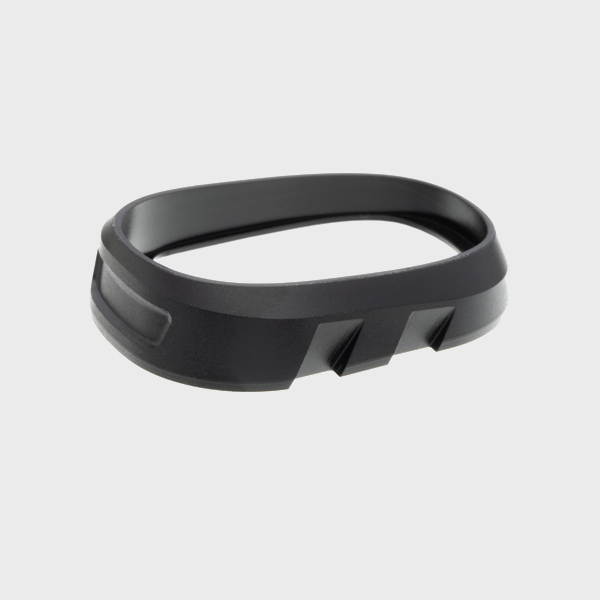
The SIG P365 XMacro gives owners a longer, fuller grip than smaller members of the P365 family while maintaining the platform's relatively slim overall architecture. That extra grip length creates enough space for a magwell to become a practical consideration, but it also creates an important tradeoff: the more material added around the bottom of the grip, the more the pistol's external profile can change.
For a carry-oriented P365 XMacro, the most useful magwell is not necessarily the one with the largest opening. Low-profile funnel geometry attempts to provide a more defined magazine opening and lower-hand interface without creating the wide, aggressive flare associated with competition-focused designs. Choosing the right configuration requires looking at funnel width, front and side flare, rear geometry, magazine baseplate clearance, hand size, and the way the pistol is carried.
What a Magwell Changes on the P365 XMacro
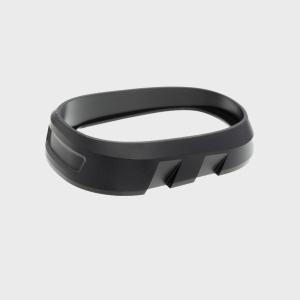
A magwell surrounds the opening at the bottom of the grip module. Even a compact design changes both the shape of that opening and the external dimensions around the lower grip.
It Creates a More Defined Magazine Opening
The funnel provides additional surrounding geometry at the bottom of the grip. Different designs can use subtle or pronounced internal transitions depending on their intended purpose.
It Changes the Lower-Hand Interface
The external portion of the magwell can create a more noticeable boundary beneath the firing hand. For some hand sizes, this can make the grip feel more contained.
It Changes the Carry Profile
Any flare extending beyond the original grip module adds dimensions near the bottom of the pistol. That matters because the lower rear portion of the grip can influence how noticeable the pistol is beneath clothing.
Why Funnel Geometry Matters
Magwells can look similar in product photos while having substantially different geometry. The important dimensions are not limited to the size of the opening.
Internal Funnel Angle
The internal surfaces determine how gradually the opening transitions toward the magazine well inside the grip. A wider external opening generally requires more material somewhere around the perimeter.
Side Flare
Material extending to the left and right increases the width at the bottom of the grip. A low-profile carry design typically keeps this dimension controlled.
Front Flare
Forward extension changes how the bottom of the grip interacts with the lower fingers and can add visible bulk to the front of the grip.
Rear Flare
The rear portion deserves particular attention on a concealed-carry configuration because it changes the outermost geometry around the heel of the grip.
Low-Profile vs Competition-Style Magwells
The difference between these categories is largely a matter of priorities rather than one design being universally superior.
Low-Profile Magwell
A low-profile design limits external dimensions while still adding a defined perimeter around the magazine opening. This approach generally makes more sense when the P365 XMacro is expected to remain a practical everyday-carry pistol.
Competition-Style Magwell
A larger design can use substantially more flare because concealment is not the primary constraint. The additional external surface creates a larger funnel but also makes the bottom of the grip wider and more prominent.
The XMacro Often Benefits From the Middle Ground
Because the XMacro already provides a full-length grip, many owners do not need an extremely large funnel. A moderate design can complement the existing grip without dramatically changing its character.
Why Bigger Is Not Automatically Faster
It is easy to judge a magwell entirely by the size of its opening. In practice, the relationship between the magazine, baseplate, grip module, and funnel matters just as much.
Usable Geometry Matters More Than Maximum Width
A well-shaped transition can provide a clearly defined opening without requiring an oversized exterior.
Hand Position Influences the Benefit
If a large magwell changes where the lower fingers sit on the grip, the additional funnel size may come with an ergonomic tradeoff.
Magazine Compatibility Still Sets the Limits
A large opening provides little value if the selected magazine basepad does not have adequate clearance around the magwell.
Concealment Printing Starts With External Dimensions
Printing occurs when the outline or shape of the carried pistol becomes noticeable through clothing. Several variables influence it, including body shape, clothing, holster design, carry position, and pistol dimensions.
The Grip Is Often a Critical Dimension
The slide generally runs along the body inside the holster, while the grip extends outward to provide access. Changes around the grip therefore deserve careful consideration on a concealed setup.
A Magwell Adds Material at the Bottom
The added width may be small, but it is located at an area already near the outer perimeter of the pistol.
Rear Geometry Can Be Particularly Noticeable
A pronounced rear flare increases the dimensions around the heel of the grip. A carry-focused design generally benefits from keeping this area restrained.
The P365 XMacro Already Has a Long Grip
The XMacro differs from smaller P365 configurations because its grip module is designed around a longer magazine and provides considerably more hand space.
There Is Less Need to Create Artificial Grip Length
Smaller pistols sometimes use magazine extensions to provide additional room for the lower fingers. The XMacro starts with a longer grip, reducing the need for a magwell to serve that role.
The Magwell Can Focus on the Lower Boundary
Instead of compensating for a short grip, a low-profile XMacro magwell can provide a more defined lower edge around an already full-length grip.
Extra Bulk Should Have a Purpose
Because the XMacro grip is already substantial for the P365 family, every additional external dimension should provide a clear ergonomic or functional benefit.
Hand Size Changes How a Magwell Feels
The same magwell can feel very different depending on how much of the owner's hand occupies the XMacro grip.
Larger Hands
Owners whose lower fingers already reach close to the bottom of the grip may notice the magwell as a stronger boundary beneath the hand. A low-profile design can provide that boundary without excessively compressing the available grip area.
Medium Hands
A moderate flare may sit below the firing hand without significantly changing finger placement, making the magwell feel like a natural continuation of the grip.
Smaller Hands
If the hand does not occupy the full length of the XMacro grip, the external shelf created by the magwell may have less influence on hand position. In that case, funnel geometry and carry dimensions may become more important considerations.
The Front Lip Can Affect Lower-Finger Comfort
Front geometry is sometimes overlooked because attention tends to focus on the width of the funnel.
A Large Front Lip Reduces Open Space
If the lower finger already sits near the bottom of the grip, an aggressive front edge can make the available hand space feel more constrained.
A Subtle Front Transition Preserves Grip Length
Low-profile designs can keep the forward portion compact while concentrating more of the funnel geometry elsewhere.
Hand Fit Should Be Evaluated Before Appearance
A visually aggressive magwell is not necessarily comfortable for every hand size.
Side Flare Determines Much of the Added Width
Viewed from the rear, side flare is one of the clearest differences between a compact carry magwell and a larger range-oriented design.
Minimal Side Flare Preserves the Slim Profile
Keeping the left and right edges close to the grip module helps maintain the XMacro's relatively narrow architecture.
More Side Flare Creates a Larger Funnel
Wider external geometry can increase the available entrance area, but it also increases the maximum width at the bottom of the grip.
Balance Is More Important Than Maximum Size
For a carry-oriented XMacro, a small increase in width may provide enough additional geometry without turning the lower grip into the widest part of the pistol.
Rear Flare and Concealment Deserve Special Attention
The rear edge of the grip is particularly relevant when evaluating a magwell for concealed carry.
Rearward Extension Changes the Heel
A magwell that extends significantly behind the original grip creates a more prominent lower corner.
Small Differences Can Be Noticeable
Because the heel is already an exterior point on the grip, even a modest additional projection can change how the pistol sits beneath certain clothing.
Carry Designs Often Minimize the Rear Edge
A low-profile magwell can use more of its funnel geometry internally or along other surfaces while keeping rearward extension under control.
Magazine Baseplate Clearance Is Essential
A P365 XMacro magwell and magazine baseplate should be treated as a combined system rather than two unrelated accessories.
The Magazine Must Fully Interface With the Grip
A baseplate that contacts the magwell prematurely can prevent the magazine from reaching its intended position.
Aftermarket Basepads Change External Geometry
Different baseplates and extensions use different shapes around the upper edge. A design that works without a magwell may not provide enough clearance once a funnel surrounds the magazine opening.
Check Both Factory and Aftermarket Magazines
If several magazine configurations are part of the setup, compatibility should be confirmed for each rather than assuming one successful combination guarantees the others.
Do Not Choose the Magwell Before the Magazine Setup
Owners planning multiple P365 XMacro upgrades can avoid compatibility problems by deciding on the magazine configuration first.
Start With the Intended Magazines
Identify which magazine bodies and baseplates will actually be used with the pistol.
Then Evaluate the Magwell
Select a funnel specifically listed as compatible with the chosen grip module and magazine setup.
Consider Future Basepad Changes
If aftermarket extensions are likely to be added later, determine whether the magwell manufacturer identifies compatible basepad configurations before finalizing the build.
Grip Module Compatibility Comes First
The P365 family includes multiple grip configurations, and the presence of the P365 name does not make every magwell interchangeable.
XMacro Is Its Own Grip Configuration
The longer XMacro grip differs from standard P365 and P365 XL grip modules. A magwell should specifically support the XMacro module being used.
Aftermarket Grip Modules Can Change Fitment
Replacement modules may alter the bottom profile, mounting interface, dimensions, or existing flare. A magwell designed around the factory XMacro module should not automatically be expected to fit every aftermarket module.
Integrated Magwell Geometry Changes the Equation
Some grip modules already incorporate additional flare around the magazine opening. Adding another magwell may be unnecessary or incompatible.
Polymer vs Aluminum Magwells
Material affects rigidity, manufacturing method, surface finish, and overall feel, but neither material automatically determines whether the magwell is low profile.
CNC Machined Aluminum
Aluminum allows manufacturers to machine defined internal transitions, thin external edges, and detailed contours while maintaining a rigid structure.
Polymer
Polymer can provide a lightweight solution and can be molded around complex geometry without adding substantial weight.
Geometry Matters More Than Material Alone
A compact aluminum magwell can be less bulky than a large polymer design. Compare actual external shape and compatibility rather than assuming one material is inherently better for concealment.
A Low-Profile Magwell Can Also Change Grip Feel
The funnel is only part of the experience. The external edge can affect how the firing hand settles onto the XMacro grip.
Defined Lower Boundary
A subtle shelf can give the lower portion of the hand a clear stopping point.
Perceived Grip Security
Some owners prefer the contained feeling created when the lower hand sits between the upper grip geometry and a small magwell flare.
Too Much Flare Can Feel Restrictive
For larger hands, an aggressive shelf can reduce comfortable space rather than improve it. This is another reason a carry-oriented XMacro often pairs well with restrained geometry.
Magwell Size Should Match the Purpose of the Pistol
The appropriate funnel geometry depends heavily on whether the XMacro is primarily a carry pistol, range pistol, or multipurpose setup.
Concealed Carry
Prioritize controlled side and rear dimensions, compatibility with the chosen magazines, and a smooth exterior profile.
Range Use
A larger funnel may be acceptable when concealment dimensions are not important.
Mixed Carry and Range Use
A moderate low-profile design offers a practical compromise by adding a defined funnel without dramatically increasing the lower-grip footprint.
Holster Fit Usually Depends More on Other Components
Because a magwell is located below the portion of the pistol captured by many holsters, it may not directly alter basic holster retention. However, the complete carry setup still needs to be evaluated.
Grip Access Can Change
A larger lower-grip flare can affect the space available between the grip and surrounding holster hardware.
Magazine Carriers Are a Separate Consideration
If extended or oversized basepads are paired with the magwell, spare-magazine carrier compatibility may also need to be checked.
Evaluate the Complete Carry System
Holster, belt, clothing, carry position, grip module, magazine basepad, and magwell all contribute to the final result.
Printing Cannot Be Judged From the Magwell Alone
A magwell can influence concealment, but it is only one variable.
Body Shape Matters
The same XMacro configuration can sit very differently on two people.
Carry Position Matters
Changes in position alter which part of the grip sits closest to clothing.
Holster Geometry Matters
Holster design influences the angle and position of the grip relative to the body.
Clothing Matters
Fabric weight, cut, and garment fit can change how visible the outline of the pistol becomes.
For that reason, the most useful comparison is not whether a magwell “prints” in isolation, but how much it changes the owner's existing XMacro carry setup.
Common P365 XMacro Magwell Buying Mistakes
Most compatibility and concealment problems come from selecting the magwell independently from the rest of the lower-grip setup.
Buying the Largest Funnel Available
A larger opening may be attractive for range use, but it can add unnecessary side and rear dimensions to a carry pistol.
Ignoring Baseplate Compatibility
The magazine may fit the grip module but still interfere with the magwell because of its basepad geometry.
Assuming All P365 Magwells Fit the XMacro
Standard P365, P365 XL, and XMacro grip configurations differ. Fitment should explicitly include the module being used.
Ignoring Hand Size
A large front lip or lower shelf can feel comfortable for one owner and restrictive for another.
Evaluating Appearance Instead of Dimensions
A magwell can look compact in photographs while still adding significant width or rearward extension. External geometry matters more than styling alone.
What to Check Before Buying an XMacro Magwell
A compatibility-first review makes it easier to find a funnel that complements the pistol instead of creating additional problems.
Exact Grip Module
Confirm that the magwell is designed for the factory P365 XMacro module or the specific aftermarket module installed on the pistol.
Magazine Compatibility
Verify support for the magazine bodies used with the selected grip.
Baseplate Compatibility
Check factory basepads, aftermarket basepads, and extensions individually when more than one configuration will be used.
Side Flare
Consider how much additional width is created at the bottom of the grip.
Rear Projection
For concealed carry, pay particular attention to how far the magwell extends beyond the original heel of the grip.
Front Lip
Make sure the forward edge leaves enough comfortable space for the lower fingers.
Intended Use
Decide whether concealment, range use, or a balance between the two is the primary objective.
A Practical Low-Profile XMacro Setup
For an owner who wants to preserve the basic character of the P365 XMacro, restraint is usually more important than maximizing funnel dimensions.
Keep Side Flare Controlled
This helps preserve the slim profile around the lower grip.
Minimize Unnecessary Rear Projection
A restrained heel reduces how much the magwell changes the external outline of the grip.
Preserve Lower-Finger Space
A compact front lip is particularly valuable for owners whose hands already occupy most of the available XMacro grip.
Match the Baseplates Before Finalizing the Build
The magazines intended for regular use should work with the funnel without requiring improvised modifications.
Keep the Upgrade Proportional
The XMacro already provides a longer grip than smaller P365 configurations. A moderate magwell can complement that architecture without turning it into an unnecessarily bulky lower frame.
When an XMacro Magwell Makes Sense
A magwell is most useful when its external and internal geometry addresses a specific preference while remaining compatible with the rest of the pistol.
You Want a More Defined Lower-Hand Boundary
A subtle external shelf can change how the bottom of the grip feels without requiring a larger grip module.
You Want a More Defined Magazine Opening
A restrained funnel can add geometry around the opening without using the dimensions of a competition-style magwell.
Your Carry Setup Can Accommodate the Added Dimensions
If the additional side and rear flare does not create unwanted printing or discomfort, a low-profile magwell can fit naturally into a carry-oriented build.
When Skipping the Magwell May Make More Sense
The P365 XMacro does not require a magwell to function effectively, and some owners will be better served by retaining the original lower-grip profile.
Minimum Printing Is the Main Priority
If every millimeter of external grip dimension matters to the carry setup, retaining the factory profile eliminates the additional flare entirely.
The Factory Grip Already Fits the Hand Perfectly
If the lower hand position feels natural and no additional boundary is desired, a magwell may provide little ergonomic benefit.
Your Preferred Baseplates Are Not Compatible
Changing an otherwise satisfactory magazine setup simply to accommodate a magwell may not be worthwhile.
You Do Not Want Additional External Dimensions
The cleanest low-profile configuration remains the grip module without an added funnel.
Did You Know?
The P365 XMacro uses a longer grip architecture than the standard P365 and P365 XL configurations, so a magwell designed for the XMacro must be matched to that specific lower-grip geometry rather than selected simply because it is labeled for the P365 family.
Conclusion
A low-profile magwell for the SIG P365 XMacro is ultimately an exercise in balancing geometry. More funnel area can create a more defined magazine opening, but additional side flare, rear projection, and front-lip size can also change hand fit and the pistol's concealed profile. For a carry-oriented XMacro, the most practical design is usually one that adds only as much external material as necessary, maintains comfortable lower-finger space, and works correctly with the intended magazine baseplates. Owners should choose the grip module and magazine configuration first, then evaluate magwell geometry around that established setup rather than treating the funnel as an isolated accessory. To explore compatible P365 and XMacro components, visit Tyrant CNC SIG Sauer upgrades.
FAQs
Does a magwell make a SIG P365 XMacro harder to conceal?
It can change the concealed profile because the magwell adds material around the bottom of the grip. How noticeable that change becomes depends on the amount of side and rear flare as well as the holster, clothing, carry position, and individual body shape.
What makes an XMacro magwell low profile?
A low-profile design generally limits external side flare, rearward projection, and front-lip size while still providing a defined transition around the magazine opening. The actual geometry is more important than the product simply being described as compact.
Will every P365 magwell fit a P365 XMacro?
No. The P365 family uses different grip configurations, and the XMacro has its own longer grip architecture. The magwell should explicitly support the exact XMacro grip module being used.
Do magazine baseplates need to be compatible with the XMacro magwell?
Yes. A basepad can fit the magazine and grip while still contacting the magwell. Factory and aftermarket baseplates should be checked against the specific funnel before finalizing the setup.
Should a concealed-carry XMacro use the smallest possible magwell?
Not necessarily. The goal is to balance the desired lower-hand feel and funnel geometry against added external dimensions. Some owners may prefer a modest low-profile magwell, while those prioritizing the smallest possible carry footprint may prefer the factory grip without one.