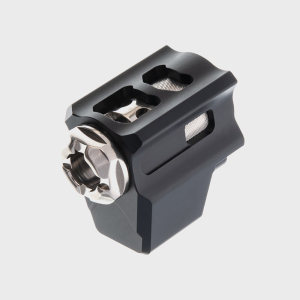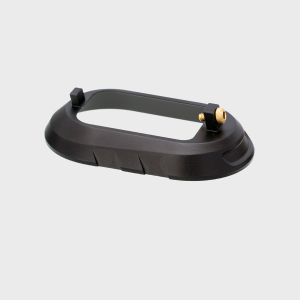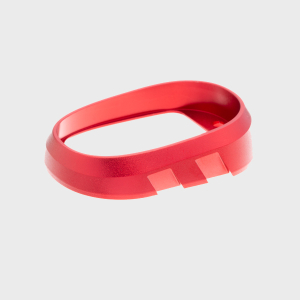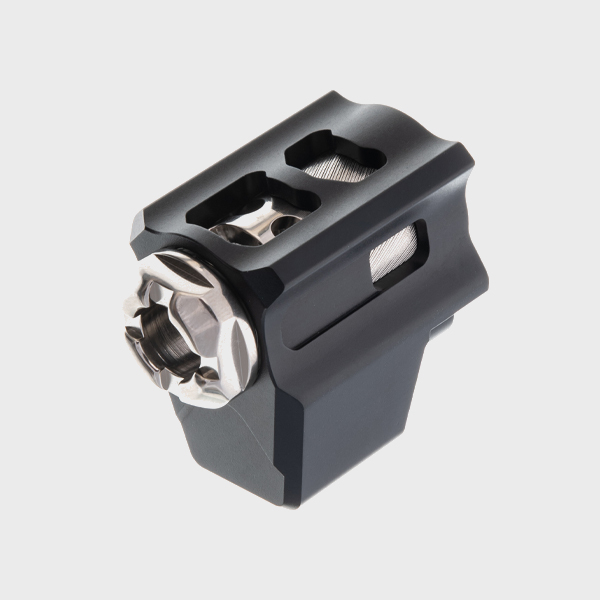
A micro compensator adds relatively little length to a Glock, but the attachment method has a major influence on how cleanly the system integrates with the barrel. Traditional threaded compensators often depend on set screws, timing hardware, or other secondary retention methods. Tyrant CNC's Glock T-Comp takes a different approach by using a two-piece stem-based design that threads onto a compatible barrel without relying on conventional set screws.
That distinction matters when evaluating retention, alignment, barrel finish, maintenance, and long-term fit. O-rings can also appear in compensator systems as a compliant retention or tensioning element, but they should not be treated as universally interchangeable with set screws or with the T-Comp's engineered stem system. The correct attachment method is the one built into the specific compensator design. For Glock owners considering a T-Comp, understanding what each retention strategy actually does makes it easier to distinguish proper fit from an improvised attempt to make a compensator stay in position.
Why Compensator Retention Matters
A compensator sits at the muzzle, where it is exposed to repeated heat, vibration, gas pressure, and movement from the pistol's operating cycle. The attachment system has to keep the component properly positioned throughout those conditions.
Alignment Must Remain Consistent
The compensator needs to remain correctly aligned with the barrel and bore. Movement at the mounting interface can change the relationship between the muzzle and compensator.
Timing Must Remain Stable
Compensator timing describes the orientation of the device relative to the pistol. A design with upper ports needs to remain in its intended orientation rather than gradually rotating during use.
Retention Should Not Damage the Barrel
A secure attachment is important, but retention should also respect the barrel surface and threads. That is one reason attachment architecture deserves as much attention as compensator size or appearance.
Understanding the Glock T-Comp Two-Piece Design
The Tyrant CNC T-Comp differs from many conventional one-piece compensators because its retention system is built around two interacting components.
The Stem Creates the Barrel Interface
The internal stem serves as the interface between the threaded barrel and the compensator body. Stem selection therefore influences where the compensator sits relative to the barrel and slide.
The Compensator Body Works Around the Stem
Instead of relying on small set screws pressing against the barrel, the T-Comp's two-piece architecture allows the compensator to be secured through its designed stem system.
No Conventional Barrel-Clamping Set Screws Are Required
Tyrant specifically developed the T-Comp to avoid the traditional approach of using small set screws against the barrel surface.
What Set Screws Do on Traditional Compensators
Set screws are commonly used as a secondary retention method on threaded muzzle devices. After the compensator reaches the intended orientation, the screws apply localized pressure to help prevent movement.
They Create Mechanical Pressure
A set screw typically contacts another component directly. Tightening increases localized clamping pressure at that contact point.
They Can Help Hold Timing
Once the compensator is positioned correctly, the screws can resist rotation away from that orientation.
They Add Additional Hardware
Each set screw becomes another component that requires correct fit, inspection, and maintenance.
The Barrel-Marring Problem With Set Screws
One disadvantage of traditional set-screw retention is that concentrated contact can mark the barrel or another mounting surface.
Pressure Is Concentrated in a Small Area
The tip of a set screw applies force over a relatively small contact patch. Depending on the design, material, and finish, this can leave visible marks.
Repeated Adjustment Can Increase Cosmetic Wear
If a compensator is removed, repositioned, and secured repeatedly, the contact points can experience additional wear.
The T-Comp Was Designed Around a Different Strategy
By eliminating conventional barrel-contacting set screws, the T-Comp avoids depending on those concentrated pressure points for retention.
Where O-Rings Fit Into Compensator Retention
An O-ring works very differently from a metal set screw. Rather than producing concentrated metal-to-metal pressure, an elastomeric ring can create friction and tension through compression.
O-Rings Provide Compliance
The material can compress slightly between mating components, allowing it to take up a controlled amount of space.
They Can Add Rotational Resistance
When an attachment system is specifically engineered around an O-ring, compression can provide resistance against unwanted movement.
They Are Not Universal Timing Devices
Adding an arbitrary O-ring to a compensator that was not designed for one can alter spacing and alignment. O-rings should only be used where the compensator manufacturer specifies them as part of the mounting system.
O-Ring Retention and Set Screws Solve the Problem Differently
Both approaches can resist movement, but they do so through different mechanical principles.
Set Screws Use Concentrated Mechanical Contact
The screw creates a relatively rigid point of resistance. Its effectiveness depends on screw position, mating surfaces, and the design of the compensator.
O-Rings Use Elastic Compression and Friction
An O-ring spreads its interaction around a larger portion of the interface and can maintain tension as the material compresses.
Neither Should Be Added Arbitrarily
A compensator engineered for set screws should use its specified hardware. A system designed around an O-ring should use the specified ring. A stem-based system such as the T-Comp should use the correct stem and its intended retention architecture.
The T-Comp Stem Is More Than a Retention Part
On the Glock T-Comp, stem selection influences more than whether the compensator remains attached.
Stem Length Influences Position
The stem helps establish where the compensator sits relative to the muzzle and slide.
Stem Fit Influences Alignment
The correct interface helps keep the compensator centered and positioned as intended around the barrel axis.
Stem Selection Can Influence Clearance
An incorrect stem length can place the compensator too close to surrounding components or leave it positioned differently from the intended configuration.
Why Stem Length Matters on Compact Glock Configurations
Compact and Slimline Glock configurations leave relatively little space around the muzzle assembly. Small dimensional differences can therefore become noticeable.
A Stem That Is Too Short Can Affect Seating
If the interface does not establish the intended position, the compensator may not sit where the design expects it to sit.
A Stem That Is Too Long Can Affect Clearance
Excessive length can alter spacing between the compensator, barrel, and slide.
The Correct Stem Establishes the Intended Relationship
The goal is not maximum tension. The goal is the stem specified for the particular T-Comp and compatible barrel configuration.
Retention and Timing Are Related but Not Identical
A compensator can be securely attached while still being incorrectly oriented. Likewise, a device can appear visually timed while having inadequate retention.
Retention Controls Movement
The mounting system keeps the compensator from unintentionally changing position.
Timing Controls Orientation
The compensator's ports and exterior geometry need to remain in the orientation intended by the manufacturer.
Alignment Controls the Relationship to the Bore
The bore and compensator opening need to maintain the relationship engineered into the system. Retention, timing, and alignment should therefore be evaluated together rather than independently.
Do Not Use Retention to Correct Poor Alignment
Additional clamping force is not a solution for a compensator that does not align correctly.
A Set Screw Cannot Correct an Incompatible Interface
Increasing screw pressure may hold a component more firmly, but it does not make incorrect geometry correct.
An Extra O-Ring Cannot Correct the Wrong Stem
Adding compliant material changes spacing and should not be used to compensate for incorrect stem length or incompatible barrel geometry.
Start With the Correct Components
Compatible barrel threads, the correct T-Comp configuration, and the specified stem should establish the basic fit before retention is evaluated.
Threaded Barrel Compatibility Comes First
A stem-attached T-Comp still depends on the underlying threaded barrel interface. Not every Glock barrel or thread pattern should be assumed to support the same compensator.
Verify the Glock Model
Glock 17, Glock 19, Glock 43, Glock 43X, and Glock 48 configurations differ in barrel and slide dimensions.
Verify the Barrel Thread Pattern
The compensator and stem need to correspond to the threads on the actual barrel rather than simply matching the Glock model name.
Aftermarket Barrel Dimensions Can Vary
Two barrels with the same nominal thread specification can differ in shoulder location, thread length, or other external dimensions. Compatibility information from the compensator manufacturer remains important.
Why a Micro Compensator Benefits From a Low-Mass Attachment System
One advantage of a micro compensator is that it avoids adding the size and mass of a larger competition-style device to the front of the pistol.
Every Added Component Contributes to Muzzle Mass
The compensator body, stem, fasteners, and other retention hardware all contribute to the assembly attached to the barrel.
A Compact System Keeps the Package Cleaner
A two-piece design can provide retention without surrounding the barrel with multiple external screws.
Low Mass Does Not Eliminate the Need for Correct Fit
A small compensator still needs appropriate alignment, clearance, and compatibility with the pistol's operating system.
Heat Affects Retention Components Differently
A muzzle device experiences repeated heating and cooling. Metal screws, aluminum or steel compensator components, and elastomeric O-rings do not respond identically to those conditions.
Metal Components Expand With Heat
Different metals can have different thermal expansion characteristics, which is one reason engineered clearances matter.
O-Rings Can Age
Elastomeric materials can harden, flatten, crack, or lose elasticity with repeated exposure to heat, chemicals, and time.
Inspection Matters
If an O-ring is part of a manufacturer-designed mounting system, its condition should be included in routine inspection rather than assuming it will retain the same properties indefinitely.
Set Screws Also Require Inspection
Set-screw systems eliminate concerns about elastomer condition but introduce their own maintenance considerations.
Fasteners Can Loosen
Repeated vibration and thermal cycling can affect small threaded hardware if it is not retained according to the manufacturer's design.
Drive Surfaces Can Become Damaged
Small hex or Torx interfaces can round if incorrect tools are used or excessive force is applied.
Contact Points Can Wear
The area where the set screw contacts the barrel or compensator interface should be checked for abnormal wear when the device is serviced.
Do Not Substitute Threadlocker for Correct Retention
Threadlocking compounds can be appropriate where specified, but they should not be used to compensate for an incorrect mounting system.
Threadlocker Does Not Correct Stem Length
If the stem is wrong for the configuration, adhesive does not restore the intended spacing or geometry.
Threadlocker Does Not Correct Alignment
A misaligned compensator remains misaligned even if its threads are difficult to rotate.
Follow the Manufacturer's Procedure
Use only the retention materials and methods specified for the exact compensator and barrel combination.
How Compensator Fit Can Affect Glock Cycling
Adding a compensator changes the mass and gas behavior at the muzzle. Incorrect fit can introduce additional variables beyond those inherent to the compensator itself.
Clearance Matters During Barrel Movement
The Glock barrel moves as the pistol cycles. The compensator must have the clearances required by its design throughout that movement.
Unwanted Contact Can Affect Return to Battery
If the compensator contacts the slide or another component where clearance should exist, the pistol may not cycle as intended.
Consistent Position Supports Consistent Operation
A retention system that keeps the compensator in its intended location helps preserve the geometry established by the design.
Signs the T-Comp Setup Should Be Inspected
A compensated Glock should be periodically checked for evidence that the mounting system is no longer behaving as intended.
Visible Rotation
If the compensator's orientation changes from its original position, the retention system should be inspected before continued use.
Unexpected Contact Marks
New wear around the slide, barrel, or compensator can indicate that clearance or alignment has changed.
Movement at the Mounting Interface
A compensator that develops noticeable movement should not simply be tightened through an improvised method.
Changes in Cycling
If a previously reliable setup begins experiencing inconsistent return to battery or other unusual cycling behavior, compensator position and fitment are among the variables worth checking.
Why Changing Multiple Variables at Once Makes Tuning Harder
A compensated pistol involves several interacting components. Diagnosing a problem becomes difficult if the compensator, stem, recoil system, barrel, and ammunition are all changed simultaneously.
Establish a Known Baseline
The underlying Glock and threaded barrel should function correctly before the compensator is added.
Change the Mounting Configuration Only as Specified
If a different stem is required for a supported barrel configuration, make that change independently rather than adding unrelated retention modifications at the same time.
Keep Compatibility Separate From Performance Tuning
A mounting problem should be resolved before evaluating whether the compensated pistol behaves differently with various ammunition or recoil-system configurations.
O-Ring Retention vs Set Screws for Carry Use
For a carry-oriented Glock, the practical concern is not which retention concept sounds more sophisticated. It is whether the complete system remains secure, compact, and predictable.
External Protrusions Matter
Set screws positioned around a compensator can add small external features, while an internal stem or O-ring-based design can maintain a cleaner exterior depending on the product.
Inspection Should Be Simple
A carry setup should allow the owner to identify visible movement, abnormal wear, or component deterioration during routine inspection.
Use the System as Engineered
A carry pistol is not the place to combine unrelated retention methods in an attempt to create extra security. Correct components and manufacturer-approved assembly should remain the priority.
Common T-Comp Retention Mistakes
Many problems begin when owners try to compensate for incorrect fit with additional retention force.
Using the Wrong Stem
A stem that does not correspond to the intended configuration can alter compensator position and clearance.
Adding an Unspecified O-Ring
An additional O-ring changes spacing and compression. It should not be used unless it is part of the manufacturer's intended design.
Adding Set Screws to a Set-Screw-Free Design
The T-Comp was specifically engineered around a two-piece attachment system rather than conventional barrel-contacting set screws. Adding another retention method defeats the purpose of that architecture.
Assuming More Retention Force Is Always Better
Excessive force can create new fitment problems rather than solving the original one.
Ignoring Barrel Differences
Aftermarket threaded barrels can vary dimensionally even when intended for the same Glock model. Confirm the barrel and compensator combination before assuming the retention system is at fault.
What to Check When Selecting a Glock T-Comp Setup
A compatibility-first approach is more useful than attempting to tune retention after purchasing mismatched components.
Exact Glock Model
Confirm whether the pistol is a Glock 17, 19, 43, 43X, 48, or another specifically supported configuration.
Generation
Where applicable, verify Gen 3, Gen 4, Gen 5, or the relevant platform generation.
Threaded Barrel
Confirm the barrel uses the thread pattern and external geometry required by the selected compensator.
Correct Stem
Use the stem specified for the intended T-Comp and barrel combination rather than attempting to create fit through additional retention materials.
Clearance
The compensator should occupy its intended position without unwanted contact with the slide or surrounding components.
Retention Method
Follow the architecture engineered into the compensator rather than mixing set screws, O-rings, adhesives, or other methods from unrelated systems.
When a Set-Screw Compensator Still Makes Sense
Set screws are not inherently a poor retention method. Many compensators are specifically engineered around them and can work as intended when used according to their manufacturer's specifications.
The Design May Require Them
If the compensator's timing and retention architecture includes set screws, removing them or replacing them with another method can compromise the intended design.
They Provide Positive Mechanical Retention
A properly designed set-screw interface can provide a rigid method of resisting rotation.
The Tradeoff Is Additional Contact Hardware
The owner should understand where the screws contact, how the manufacturer intends them to be retained, and what inspection the system requires.
When an O-Ring-Based System Makes Sense
O-ring retention works best when the compensator was engineered around the elastic properties of the ring from the beginning.
The Groove and Compression Must Be Intentional
An engineered O-ring interface accounts for the dimensions and compression of the ring rather than treating it as an improvised spacer.
Replacement Specifications Matter
Diameter, cross-section, and material influence how an O-ring behaves. A visually similar replacement is not automatically equivalent.
Condition Should Be Monitored
Flattening, cracking, hardening, or other deterioration can change the amount of tension the ring provides.
Why the T-Comp Stem System Is Different
The central advantage of the T-Comp architecture is that it was designed as a complete two-piece mounting solution rather than a traditional one-piece compensator that depends on external set screws pressing against the barrel.
Cleaner Barrel Interface
Eliminating conventional set-screw contact reduces the need for concentrated pressure against the barrel surface.
Replaceable Internal Component
The internal stem is a distinct component, allowing the mounting interface to be treated separately from the external compensator body.
Fitment Remains Critical
The absence of conventional set screws does not make compatibility less important. Correct stem selection, threaded-barrel compatibility, alignment, and clearance remain fundamental.
When to Stop Using the Compensator and Inspect It
Changes in a muzzle device should not be ignored simply because the pistol continues to operate.
The Compensator Has Rotated
Any clear change in timing indicates that the attachment system should be evaluated.
The Compensator Contacts the Slide
New impact or rubbing marks can indicate altered position or insufficient clearance.
The Stem or Threads Show Damage
Visible deformation, damaged threads, or unusual wear should be addressed before the system is returned to use.
An O-Ring in a Designed O-Ring System Has Deteriorated
If the specific compensator uses an O-ring and the ring is cracked, flattened, or damaged, replace it according to the manufacturer's specifications rather than improvising a substitute.
Did You Know?
Tyrant CNC developed the Glock T-Comp around a two-piece stem design specifically so the compensator can attach to the threaded barrel without relying on the conventional barrel-contacting set screws used by many one-piece compensators.
Conclusion
O-rings, set screws, and stem-based compensator systems achieve retention in fundamentally different ways, and they should not be treated as interchangeable tuning methods. Set screws provide concentrated mechanical retention, while an engineered O-ring interface uses controlled compression and friction. The Glock T-Comp follows a different path by using a two-piece stem architecture that avoids conventional barrel-contacting set screws altogether. For a reliable setup, correct Glock and barrel compatibility, proper stem selection, stable timing, adequate clearance, and routine inspection matter more than simply maximizing attachment force. Avoid adding O-rings, set screws, or other retention methods that are not part of the compensator's intended design. To explore compatible Glock compensator options, visit Tyrant CNC handgun compensators.
FAQs
Does the Tyrant CNC Glock T-Comp use traditional set screws against the barrel?
No. The T-Comp uses a two-piece stem-based design rather than the conventional approach of using small set screws to secure the compensator against the barrel.
Can an O-ring be added to a Glock T-Comp to make it tighter?
An O-ring should not be added simply to increase retention unless it is specifically required by the manufacturer's mounting design. Adding material can change spacing, timing, and clearance rather than correcting the underlying fitment issue.
Why does T-Comp stem length matter?
The stem helps establish the compensator's position relative to the threaded barrel and slide. Incorrect stem selection can affect seating, alignment, clearance, and consistent operation.
Are set-screw compensators unreliable?
Not inherently. Set screws can provide effective mechanical retention when the compensator is specifically designed around them. The tradeoffs include additional hardware, concentrated contact points, and the need to monitor screw retention and contact surfaces.
What should I check if a Glock T-Comp starts moving?
Stop using the setup and inspect the compensator, stem, threaded-barrel interface, alignment, and surrounding components for movement, damage, or abnormal wear. Avoid adding improvised retention methods to compensate for a fitment problem.