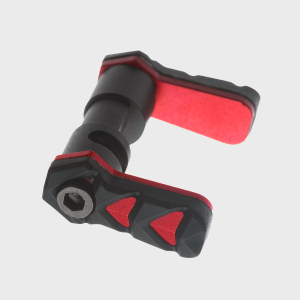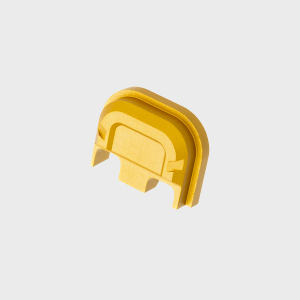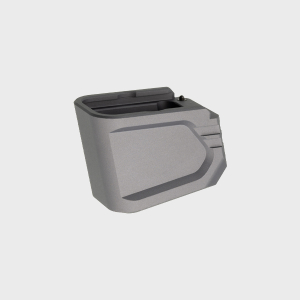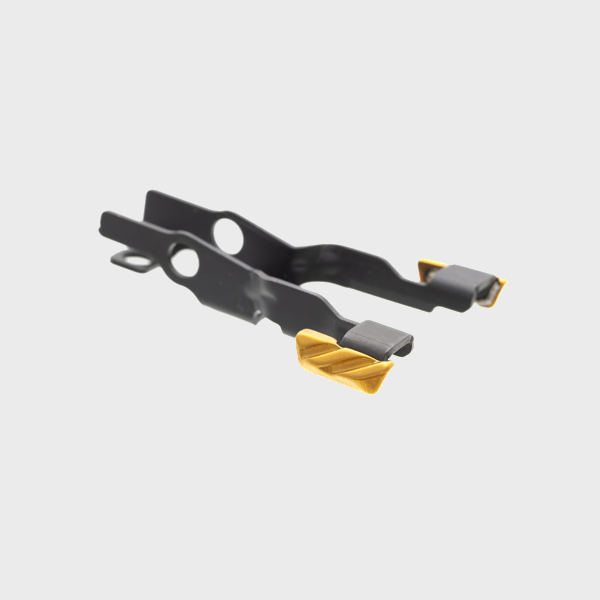
An extended slide catch lever can make the SIG P320 easier to manipulate, especially for owners who struggle to reach the factory control without changing their grip. More surface area can improve accessibility and provide a more obvious contact point, but extension introduces an equally important consideration: the lever becomes easier to touch when the shooter does not intend to activate it.
Premature lock-back can occur when unintended hand contact pushes the slide catch upward while ammunition is still present in the magazine. On the other side of the equation, riding the lever downward can contribute to failure to lock open after the final round. The ideal P320 slide catch therefore is not simply the largest available control. Its profile needs to balance thumb access, grip-module geometry, hand size, ambidextrous operation, and enough clearance to prevent routine firing-grip pressure from interfering with normal function.
What the P320 Slide Catch Lever Does
SIG Sauer identifies the P320 control as the slide catch/release lever. Its primary functions are to hold the slide open and allow it to be released from the locked position.
Last-Round Lock-Back
With an empty magazine in the pistol, the magazine follower interacts with the slide catch system so the slide can remain locked to the rear after the final round.
Manual Lock-Back
The control is also involved when the slide needs to be intentionally held in its rearward position for inspection or administrative handling.
Slide Release
SIG's P320 operating instructions also identify pressing the slide catch lever as a method of releasing the slide from its locked position.
Why Extend the P320 Slide Catch?
The factory control represents a compromise between accessibility and a relatively compact external profile. Depending on the owner's hands and grip module, however, the standard surface can feel difficult to locate consistently.
Additional Contact Area
A moderately extended surface gives the thumb a larger target. The user does not need to place the thumb on as narrow an area to locate the control.
Improved Thumb Reach
Owners with shorter thumbs may find that additional surface area reduces the amount of hand movement needed to reach the lever.
More Defined Texture
A machined surface with deliberate texture can provide a clearer tactile reference than a small, relatively low-profile control.
Why Bigger Is Not Automatically Better
Extending a control solves an accessibility problem by moving more material into the area around the shooter's hands. If the extension becomes excessive, the same feature that makes the lever easier to find intentionally can also make it easier to contact unintentionally.
Additional Surface Creates Additional Contact Opportunity
A larger lever occupies more space around the thumb and upper portion of the grip.
High Grips Reduce Available Clearance
A high firing grip moves the hands closer to the slide and its controls. This can be beneficial for overall ergonomics, but it also makes slide-catch profile especially important.
Moderate Extension Is Often the Better Balance
An OEM-plus approach adds usable surface without turning the slide catch into an oversized shelf.
What Is Premature Slide Lock?
Premature lock-back occurs when the slide becomes locked open before the magazine is empty. Several mechanical issues can contribute to abnormal lock-back, but unintended contact with an extended slide catch is an important ergonomic factor to consider.
The Lever Is Pushed Upward
If the firing or support hand places upward pressure on the control during operation, the slide catch can potentially move toward its locking position when that input was not intended.
The Problem Can Appear Grip Dependent
A pistol may appear mechanically normal during administrative checks while experiencing unwanted lever contact with a particular two-handed grip.
More Extension Can Increase Sensitivity to Hand Placement
As the accessible surface becomes larger, owners should pay more attention to where their thumbs naturally rest relative to the lever.
Premature Lock-Back and Failure to Lock Back Are Different Problems
These two symptoms are sometimes grouped together because both involve the slide catch, but the direction of unintended input can be opposite.
Premature Lock-Back
Unintended upward contact can contribute to the slide locking before the magazine is empty.
Failure to Lock Back
Pressure that holds the slide catch downward can interfere with normal last-round hold-open even when the magazine follower is attempting to raise the control.
Thumb Position Can Therefore Matter in Both Directions
An extended lever needs to remain accessible when deliberately used while staying clear of normal hand pressure during routine operation.
Why a High Thumbs-Forward Grip Deserves Attention
A high thumbs-forward grip places the hands close to several P320 controls. That makes the relationship between thumb placement and slide-catch geometry particularly important.
The Firing-Hand Thumb Can Approach the Lever
Depending on hand size and grip module dimensions, the thumb can naturally rest near the slide catch.
The Support Hand Changes Available Space
Adding the support hand can move or support the firing-hand thumb differently than when the pistol is held one-handed.
Extended Geometry Makes the Relationship More Noticeable
A modest increase in control area can improve intentional access, while a very large extension may occupy space already being used by the hands.
Hand Size Changes P320 Slide Catch Ergonomics
The same lever can solve an accessibility problem for one owner while creating unwanted contact for another.
Smaller Hands
Shorter thumbs can make the factory control harder to reach without shifting the pistol in the hand. A moderate extension can make the control easier to locate while preserving the firing-hand position.
Medium Hands
For many users, a slightly larger surface can provide easier access without significantly changing grip clearance.
Larger Hands
Large hands often occupy more of the available frame area. An aggressively extended lever may therefore create unnecessary contact even if reaching the factory control was never difficult.
Grip Module Geometry Changes Thumb Position
The P320's modular architecture makes slide-catch ergonomics more complicated than evaluating the lever by itself. Different grip modules can change circumference, contour, beavertail geometry, and where the hand settles relative to the controls.
Grip Circumference Changes Reach
A larger circumference can move the thumb farther from the slide catch, while a smaller or differently shaped module may place it closer.
Backstrap Shape Influences Hand Height
The way the rear of the module fills the palm affects how high the firing hand naturally sits.
Establish the Grip Module Before Fine-Tuning Controls
If a P320 grip-module change is already planned, it makes sense to evaluate the final grip geometry before deciding exactly how much slide-catch extension is useful.
The P320 Uses an Ambidextrous Slide Catch System
The P320's slide-catch arrangement provides control surfaces on both sides in common configurations. An aftermarket replacement should therefore be evaluated as a complete ambidextrous interface.
Check Both Sides
Do not evaluate only the side normally manipulated by the dominant thumb. The opposite control surface also occupies space around the hands.
Left-Handed Ergonomics Matter
An extended ambidextrous configuration can provide more accessible control geometry for left-handed users without requiring them to adapt to a one-sided control.
Opposite-Side Contact Can Still Occur
Hand size and grip technique can create interference on either side, so both control surfaces should remain proportional.
Surface Area Matters More Than Maximum Extension
An effective extended slide catch does not need to project dramatically away from the pistol.
Usable Contact Area Can Come From Shape
A wider or better-defined thumb surface can improve accessibility without requiring excessive outward protrusion.
Texture Helps the Thumb Identify the Control
Machined texture can provide tactile definition, reducing the need to make the entire lever oversized.
Edge Geometry Influences Comfort
A control that sits close to the hand should avoid unnecessarily sharp or prominent edges that create pressure points during normal handling.
Extension Direction Matters
Two slide catches can both be described as extended while interacting with the hand very differently.
Outward Extension
Moving the control farther away from the frame can make it easier to locate but can also increase the chance of incidental contact.
Lengthwise Extension
Increasing usable surface along the existing control area can improve access without necessarily creating the same amount of outward protrusion.
Textured Surface Expansion
Improving the shape and traction of the thumb pad can sometimes provide more practical accessibility than simply making the component larger in every direction.
Carry-Oriented and Range-Oriented P320s Have Different Priorities
The appropriate amount of extension depends partly on the pistol's intended role.
Carry-Oriented P320
A moderate profile generally makes sense when minimizing protrusion and unwanted interaction with equipment are important.
Range-Oriented P320
An owner who prioritizes easy control access may accept somewhat more surface area if it works correctly with their grip.
Competition-Oriented Configurations
Larger controls can be useful in specialized setups, but additional surface still needs to remain clear of the shooter's normal grip.
Holster Clearance Should Not Be Ignored
The slide catch sits relatively high on the pistol, but an extended control can still change the external profile around the frame and slide junction.
Holsters Differ in Coverage
Some holsters closely surround the control area while others leave more clearance.
Rigid Holsters Deserve Particular Attention
A control should not be placed under unintended pressure by surrounding holster material.
Evaluate the Complete Carry Setup
A part that functions correctly in the hand should also remain free from unwanted external contact when the pistol is used with its intended equipment.
Magazine Function Is Part of Slide Catch Diagnosis
Not every lock-back problem is caused by the lever or the shooter's grip. The magazine is directly involved in normal last-round hold-open.
The Follower Interacts With the Slide Catch
As the magazine reaches empty, follower position contributes to raising the slide catch into its locking position.
Magazine Condition Can Affect Hold-Open Behavior
Follower movement, spring condition, and component tolerances can influence whether the control receives the intended input from an empty magazine.
Test More Than One Magazine When Diagnosing a Problem
If abnormal lock-back behavior occurs with only one magazine, the magazine itself deserves inspection rather than immediately attributing the issue to the extended lever.
Extended Magazine Components Can Add Another Variable
P320 owners frequently combine several upgrades, including magazine extensions and control changes. When abnormal last-round behavior appears after multiple modifications, identifying the cause becomes more difficult.
Change One Variable at a Time
A known baseline makes it easier to determine whether a new control actually introduced a problem.
Compare Magazine Configurations
If one magazine consistently produces different lock-back behavior from another, that difference is useful diagnostic information.
Do Not Assume the Largest Visible Upgrade Is Responsible
The slide catch may be easy to notice, but magazine components and hand placement can produce similar symptoms.
How to Recognize Grip-Induced Slide Catch Interference
Grip-related interference often has patterns that distinguish it from a purely mechanical problem.
The Problem Changes With Hand Position
If abnormal behavior appears with one grip position but not another, unintended control contact becomes a more relevant possibility.
The Lever Sits Directly Beneath a Thumb
Visible overlap between the normal thumb position and the extended surface deserves attention.
One-Handed and Two-Handed Behavior May Differ
Adding the support hand changes thumb placement and pressure. A difference between the two can help identify whether the hands are interacting with the control.
These observations can help identify a possible source of interference, but unexplained safety or reliability problems should be inspected by a qualified armorer or gunsmith rather than diagnosed solely by changing shooting technique.
Do Not Solve Premature Lock-Back by Modifying the Lever
If unwanted lock-back appears, immediately grinding, bending, filing, or otherwise changing the slide catch is not an appropriate first response.
Confirm Compatibility First
Verify that the replacement is designed for the exact P320 configuration and grip setup.
Check for External Contact
Determine whether the hand, holster, or another external component is interacting with the lever.
Check the Magazine Variable
Abnormal follower or magazine behavior can affect slide-catch operation and should not be overlooked.
Use Professional Inspection When Function Is Uncertain
The slide catch participates in normal operating and administrative functions. If its behavior cannot be confidently explained, the pistol should be inspected before continued use.
Why an OEM-Plus Profile Often Works Well
An OEM-plus control keeps the general proportions of the factory interface while making targeted changes to accessibility.
Enough Surface to Find Deliberately
The thumb gains a more obvious contact point without requiring an exaggerated shelf.
Less Opportunity for Accidental Contact
Keeping protrusion moderate preserves more clearance around a high firing grip.
Cleaner Overall Profile
A restrained extension complements the modular P320 without making a small control dominate the side of the pistol.
Control Accessibility Should Be Evaluated With the Final Grip
Owners sometimes evaluate a slide catch by holding the bare grip module loosely or manipulating the pistol with one hand. That does not necessarily represent how the control interacts with the hands during normal use.
Establish a Repeatable Grip
Hand placement should be consistent before deciding whether the lever is genuinely difficult to reach.
Look at Natural Thumb Position
If the thumb naturally clears the lever but can still reach it deliberately, the geometry is likely closer to the desired balance.
Avoid Designing the Entire Grip Around One Control
The slide catch should complement a comfortable, repeatable grip rather than forcing the owner to hold the pistol unnaturally simply to avoid the lever.
Common P320 Extended Slide Catch Mistakes
Most ergonomic problems come from focusing on maximum accessibility without considering what happens when the control is not being intentionally used.
Choosing the Largest Lever Available
Maximum surface area can create unnecessary interference with a high grip.
Ignoring the Grip Module
Changing modules can alter thumb reach enough to change whether an extended lever is beneficial.
Ignoring the Opposite Side
The P320's ambidextrous control arrangement means both sides should be evaluated for hand clearance.
Blaming Every Lock-Back Problem on the Lever
Magazine condition and other mechanical factors can also influence slide-catch behavior.
Assuming Premature Lock-Back and Failure to Lock Back Have the Same Cause
One can involve unwanted upward input while the other can involve downward interference. Correct diagnosis matters.
Modifying the Part Before Identifying the Cause
Removing material from a control before determining why abnormal behavior is occurring can introduce additional problems.
What to Check Before Choosing a P320 Extended Slide Catch
A compatibility and ergonomics review can determine whether an extended lever solves a real problem or simply adds unnecessary surface area.
Exact P320 Configuration
Confirm compatibility with the specific P320 variant and fire-control configuration.
Grip Module
Consider the module's dimensions and where it places the firing hand relative to the control.
Hand Size
Determine whether the factory lever actually requires an inconvenient grip shift.
Thumb Placement
Look at where both thumbs naturally sit with the complete two-handed grip.
Extension Profile
Consider how much additional surface the replacement adds and in which direction that material extends.
Magazine Setup
Normal last-round hold-open depends on magazine interaction, so magazines should be part of the overall evaluation.
Intended Use
A carry pistol, range pistol, and specialized competition setup can justify different levels of control protrusion.
When the Factory Slide Catch May Be the Better Choice
An aftermarket control should solve a specific problem rather than being treated as mandatory.
You Already Reach the Factory Lever Easily
If manipulation is consistent without shifting the grip, additional extension may provide little practical benefit.
Your Thumb Naturally Rests Very Close to the Control
Increasing the lever's surface area can reduce already limited clearance.
Minimum External Protrusion Is Important
The factory-style profile may be preferable when maintaining the cleanest possible side profile is the priority.
Your Existing Setup Locks Back Reliably
There is value in leaving a correctly functioning control system unchanged when there is no accessibility problem to solve.
When an Extended P320 Slide Catch Makes Sense
A moderate extended control is most useful when the factory lever creates a repeatable ergonomic limitation.
The Factory Surface Is Difficult to Locate
Additional area and texture can provide a more obvious thumb interface.
You Need to Shift Your Grip to Reach the Control
A properly proportioned extension can reduce the need to reposition the pistol simply to access the lever.
Your Normal Grip Leaves Adequate Clearance
If the hands naturally remain clear of the larger surface until deliberate input is applied, the extension is less likely to create unwanted interaction.
The Part Matches the Complete P320 Configuration
Compatibility should include the pistol configuration, grip module, and surrounding controls rather than relying only on the P320 name.
Did You Know?
SIG Sauer identifies the P320 component as a slide catch/release lever because the same control holds the slide to the rear and can also be used to release it, making its position and accessibility important in both normal lock-back and administrative handling.
Conclusion
An extended slide catch can make the SIG P320 easier to manipulate, but successful ergonomics depend on preserving enough clearance to prevent unintended contact. More surface area can help owners with limited thumb reach, yet an oversized control can interact with a high thumbs-forward grip and contribute to premature lock-back or other inconsistent slide-catch behavior. Grip-module dimensions, hand size, ambidextrous control clearance, magazine condition, holster interaction, and intended use should all be evaluated before assuming that maximum extension is desirable. The best approach is an appropriately sized control that can be located intentionally while remaining out of the way during normal operation. For compatible P320 control upgrades, visit Tyrant CNC SIG Sauer upgrades.
FAQs
Can an extended P320 slide catch cause premature lock-back?
It can increase the opportunity for unintended contact if its additional surface overlaps with the shooter's normal thumb position. Premature lock-back can have other causes as well, so repeated abnormal behavior should be properly diagnosed rather than automatically attributed to the lever.
Why does my P320 sometimes fail to lock open after the last round?
One possible cause is the shooter's thumb applying downward pressure to the slide catch, but magazine follower movement, spring condition, component compatibility, and other mechanical factors can also influence last-round hold-open.
Is a larger P320 slide catch always easier to use?
A larger surface can improve accessibility, but excessive size can interfere with the firing grip. A moderate extension that improves thumb access while maintaining clearance is generally more balanced than simply maximizing control size.
Does the P320 grip module affect slide catch ergonomics?
Yes. Different grip-module dimensions and contours change where the hand and thumb sit relative to the slide catch. If a grip-module change is planned, it is useful to establish that configuration before deciding how much control extension is needed.
Should I modify an extended slide catch if it causes unwanted lock-back?
Do not immediately grind, bend, or otherwise modify the component. First verify compatibility, hand and holster contact, magazine behavior, and the condition of the relevant components. If the cause remains uncertain, have the pistol inspected by a qualified armorer or gunsmith.