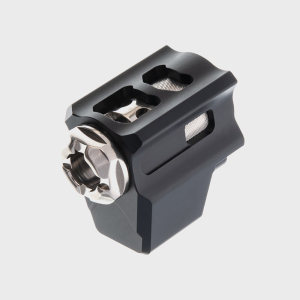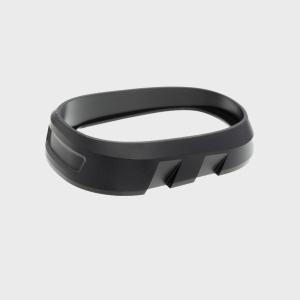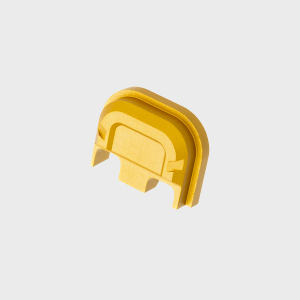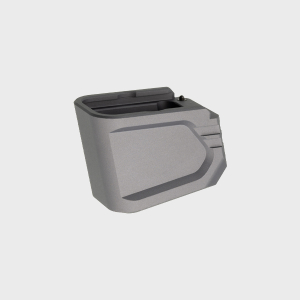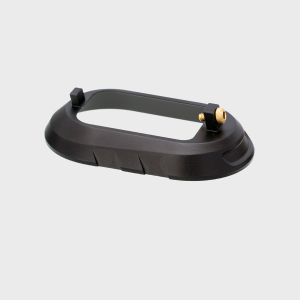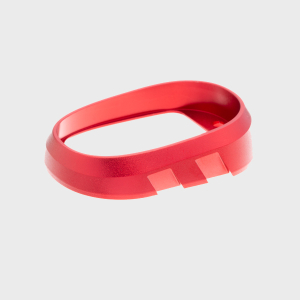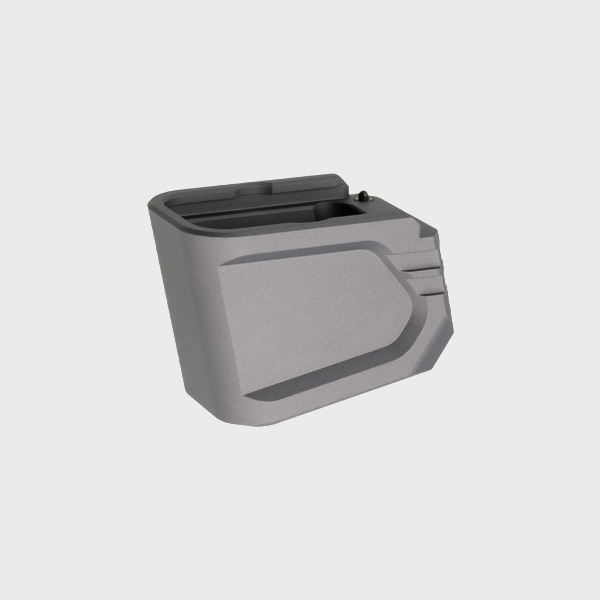
Extended controls are among the most noticeable ergonomic upgrades available for a Glock because they change the surfaces the shooter interacts with directly. A slightly larger slide stop, a more accessible magazine release, or a redesigned takedown control can make the pistol feel different without requiring major changes to the frame or grip.
The key is choosing the right amount of extension. Bigger is not automatically better. Glock factory controls are intentionally compact, and that low-profile design has advantages for carry and general handling. Aftermarket controls make the most sense when they address a specific issue such as thumb reach, available contact area, hand size, or preferred grip position. Model and generation compatibility are equally important because Glock controls are not universal across Gen 3, Gen 4, Gen 5, Slimline, and newer configurations.
What Counts as an Extended Glock Control?
An extended control changes the external dimensions or contact surface of a factory control to make it easier to reach or identify by touch. The change can be subtle or substantial depending on the design.
Extended Slide Stop
An extended slide stop provides additional surface around the lever used to interact with the slide-locking system. The extra surface may be useful for shooters who find the factory lever difficult to reach consistently.
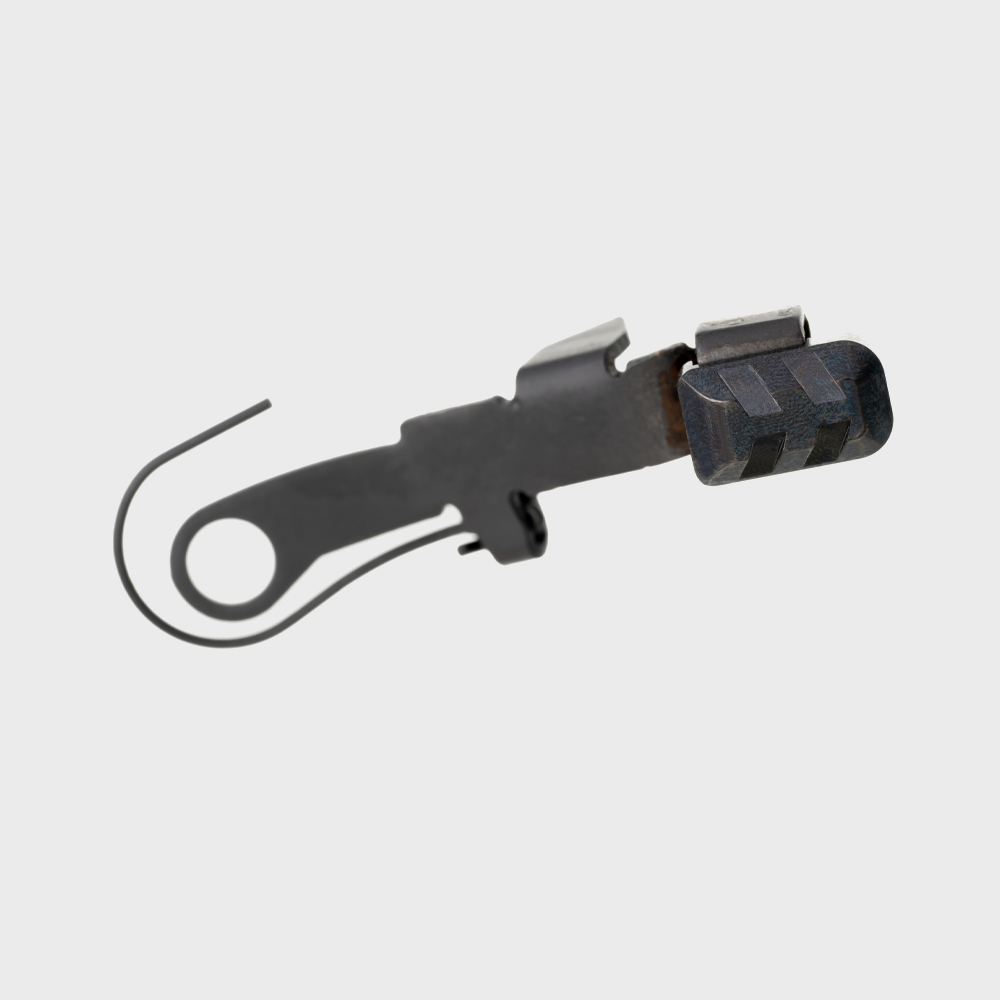
Extended Magazine Release
An extended magazine release projects farther from the frame or provides a larger contact surface. Its primary ergonomic advantage is reducing how far the thumb must reach to contact the control.
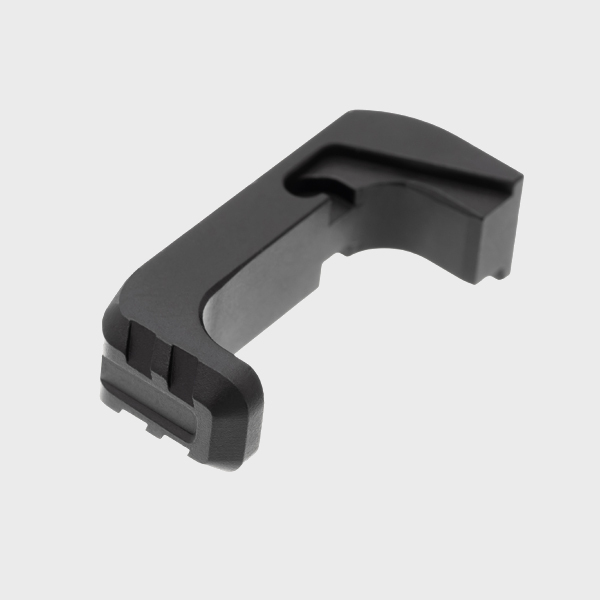
Extended or Redesigned Takedown Control
The takedown control sits in a different functional category because it is primarily associated with disassembly rather than routine shooting controls. An aftermarket design can provide a more defined external surface while maintaining a relatively compact profile.
Why Glock Owners Consider Extended Controls
Factory Glock controls are intentionally restrained. For many owners, that configuration works perfectly. Others find that a small increase in surface area better matches their hand size or preferred setup.
Thumb Reach
Hand size and grip circumference influence how naturally the thumb reaches the magazine release and slide stop. A modest extension can reduce the amount of hand repositioning required to contact a control.
More Defined Contact Surfaces
Machined or differently contoured controls can provide a more distinct surface under the thumb without dramatically changing the pistol.
Personalized Ergonomics
Two owners using the same Glock model can have very different preferences because finger length, thumb position, grip pressure, and hand size vary considerably.
The Slide Stop and Slide Lock Are Different Glock Parts
Terminology becomes important when shopping for Glock components. The slide stop lever and slide lock perform different functions and should not be treated as interchangeable names.
Slide Stop Lever
The slide stop lever is the external control located higher on the frame. It participates in holding the slide open and provides an external surface for interacting with that function.
Slide Lock
Glock terminology uses “slide lock” for the separate takedown component positioned above the trigger area. Aftermarket sellers may also describe this component as a takedown lever or extended slide lock.
Check the Product Description Carefully
If a product is advertised as a Glock “slide lock,” do not assume it refers to the slide stop. Confirm the component's location, purpose, and exact model compatibility before ordering.
Extended Slide Stops: What Actually Changes?
The factory slide stop uses a relatively flat external profile. An extended version adds a more pronounced contact area while remaining in the same general location on the frame.
Additional Thumb Surface
The primary ergonomic difference is additional surface for the thumb to locate and contact.
More Leverage at the Control
A more pronounced external profile can make the lever feel easier to manipulate, particularly for owners who find the standard surface difficult to contact.
Minimal Change to the Overall Pistol
Compared with a larger grip modification or magazine extension, the slide stop occupies very little space. That makes it attractive to owners who want an ergonomic change without substantially changing the pistol's dimensions.
When an Extended Slide Stop Makes Sense
An extended slide stop is most useful when the factory lever presents a genuine accessibility issue.
The Factory Lever Is Difficult to Reach
If the thumb does not naturally make sufficient contact with the factory surface, a slightly larger profile may provide a better interface.
The Owner Prefers More Tactile Definition
A more prominent lever can be easier to distinguish by touch from the surrounding frame.
A Low-Profile Upgrade Is Preferred
An extended slide stop can provide a noticeable ergonomic change without adding substantial length to the grip or width to most of the pistol.
When the Factory Slide Stop May Be Better
Not every Glock benefits from a larger slide stop. The factory profile has advantages of its own.
Your Thumb Already Reaches It Easily
If the factory control is comfortable and accessible, additional surface may solve no meaningful problem.
Your Grip Naturally Contacts the Lever
Some hand positions place the thumb close to the slide stop. Increasing its size can create more opportunity for unintended contact.
Minimum External Profile Is the Priority
Owners who want the most streamlined carry configuration may prefer retaining the original low-profile control.
Gen 5 Slide Stops Need Special Attention
Generation matters significantly when selecting Glock controls. Gen 5 pistols use an ambidextrous slide stop lever, which distinguishes them from many earlier-generation configurations.
Ambidextrous Design
The Gen 5 control provides external slide-stop surfaces on both sides of the pistol. An aftermarket replacement therefore needs to be designed around that architecture.
Do Not Assume Gen 3 or Gen 4 Compatibility
A slide stop that fits an earlier Glock generation should not automatically be expected to work with Gen 5.
Check the Exact Model Too
Generation alone does not establish universal compatibility. Slimline and other Glock configurations may use different components even when they share similar design language.
Extended Magazine Releases: A Small Part With a Noticeable Effect
The magazine release is one of the most popular controls to change because small differences in height and surface shape can noticeably affect thumb reach.
Additional Projection
An extended release sits farther outward or provides additional usable surface compared with a standard low-profile button.
More Defined Texture
Aftermarket releases may incorporate machined texture or geometric features that make the button easier to identify by touch.
Reduced Need to Shift the Hand
For owners whose thumbs fall slightly short of the factory button, additional surface can improve access without requiring a different grip circumference.
How Much Magazine Release Extension Is Enough?
The best magazine release is not necessarily the one that protrudes the farthest. The objective is to provide enough additional reach without making the control unnecessarily prominent.
Small Hands May Benefit From Additional Reach
A slightly extended control can reduce the distance the thumb must travel from the normal firing-hand position.
Large Hands May Need Less Extension
If the thumb already reaches the factory button easily, a highly extended release may provide little ergonomic advantage.
Carry Pistols Benefit From Restraint
A carry-oriented release should provide useful additional surface while remaining proportional to the frame.
Gen 3 vs Gen 4 and Gen 5 Magazine Releases
Magazine-release compatibility is another area where generation differences matter.
Gen 3 Uses an Earlier Magazine Catch Design
Accessories intended specifically for Gen 3 should be selected according to that generation's frame and magazine-catch architecture.
Gen 4 and Gen 5 Use a Reversible Magazine Catch
The later design supports changing the operating side of the magazine release, making the control more adaptable to different users.
Do Not Buy Based on Appearance
Two extended magazine releases can look similar while being designed for different frame generations. Manufacturer fitment should determine compatibility.
Slimline Magazine Releases Are Their Own Category
Glock 43, 43X, and 48 models should not automatically be grouped with wider double-stack Glock frames when selecting controls.
Glock 43 Is Not the Same as 43X/48
The Glock 43 uses a different grip and magazine architecture from the 43X and 48. An aftermarket control should specifically list the supported Slimline models.
43X and 48 Share More Lower-Frame Components
The Glock 43X and Glock 48 use the same general grip and magazine format, so many compatible external controls are offered for both.
Keep the Release Proportional
A large button becomes particularly noticeable on a narrow Slimline frame. A modest extension can preserve the character of the pistol while adding useful contact surface.
Material Matters for Magazine Releases
Aftermarket magazine releases are available in different materials, and the choice should be considered alongside the magazine configuration.
CNC Machined Aluminum
Aluminum allows manufacturers to create a rigid, precisely shaped control with detailed surface texturing while keeping component weight low.
Polymer
Polymer maintains material characteristics closer to many factory-style controls and can provide a lightweight interface.
Consider the Complete Magazine System
Magazine body material, catch material, and the manufacturer's compatibility requirements should be considered together rather than assuming a metal control is automatically preferable.
The Takedown Lever Has a Different Job
The Glock takedown control is not manipulated in the same routine manner as the magazine release or slide stop. Its purpose is tied primarily to the pistol's disassembly system.
It Sits Close to the Frame
The factory slide lock has a compact profile, which helps keep the sides of the pistol relatively smooth.
Aftermarket Versions Can Add Surface
An extended version can provide a more defined external edge without needing to become a large protruding control.
Low Profile Still Matters
Because the component sits near the front of the trigger area, excessive extension provides little reason for most owners. A controlled increase in surface is generally more consistent with the Glock's streamlined design.
Why Takedown-Control Compatibility Matters
The takedown component may appear simple, but buyers should still verify exact platform fitment.
Different Glock Families Can Use Different Components
Full-size, compact, subcompact, Slimline, and generation-specific configurations should not automatically be assumed to share the same part.
Frame Geometry Matters
The control needs to fit correctly within the surrounding frame architecture rather than simply looking similar to the original part.
Use Explicit Fitment Lists
A product described only as fitting “Glock pistols” does not provide enough information for a compatibility decision. Look for specific models and generations.
Should All Three Controls Be Extended?
There is no reason every Glock needs an extended slide stop, magazine release, and takedown control simultaneously.
Evaluate Each Control Separately
If the magazine release is difficult to reach but the slide stop already feels comfortable, change only the component that addresses the problem.
Avoid Upgrading by Checklist
The availability of an aftermarket component does not mean the factory part is inadequate for every owner.
Build Around the Hand
Hand size and grip position should determine how much additional surface is useful on each control.
Extended Controls for Concealed-Carry Glock Builds
A carry-oriented pistol benefits from balancing accessibility with a restrained external profile.
Choose Moderate Extensions
A control only needs enough additional surface to improve its interface. Large protrusions can work against a streamlined carry setup.
Check Holster Interaction
After changing external controls, make sure the complete pistol remains compatible with the intended holster and that surrounding material does not place unwanted pressure against a control.
Consider All External Upgrades Together
An extended magazine release may add very little bulk by itself, but several oversized components can collectively change the pistol's profile.
Extended Controls for Range-Oriented Builds
A Glock primarily configured for range use allows more flexibility because minimum external dimensions may be less important.
Additional Surface May Be More Acceptable
A larger control can be considered when concealability is not part of the design goal.
Coordinate Controls With the Grip Setup
Backstraps, magwells, grip modifications, and other ergonomic changes can alter hand position. Finalize the basic grip before deciding how much extension is useful.
Consistency Still Matters
Controls should remain easy to distinguish and should not interfere with the owner's natural grip simply because additional external size is acceptable.
Extended Controls and Hand Size
Hand dimensions are among the strongest reasons one owner may prefer an extended control while another prefers the factory component.
Smaller Hands
A modestly extended magazine release can be particularly useful because thumb reach is often the primary limitation. Additional slide-stop surface may also make the control easier to locate.
Medium Hands
Factory controls may already be accessible, making subtle extensions more appropriate than highly oversized components.
Larger Hands
Longer fingers and thumbs may already reach the controls naturally. The main consideration becomes whether additional surface improves tactile definition without creating unwanted contact.
Grip Position Can Matter More Than Control Size
Before changing a control, consider where the hands naturally sit on the pistol.
Thumb Position
A high thumb position may place the firing hand close to the slide stop, while another grip style may leave considerably more space around it.
Grip Circumference
Changing backstraps on compatible Glock models can alter thumb reach. A magazine release that initially feels too small may feel different after the grip circumference changes.
Do Not Compensate for the Wrong Grip Setup
If the grip itself does not fit the hand, installing increasingly large controls may not address the underlying ergonomic issue.
One Common Issue With Extended Slide Stops
Additional surface makes a slide stop easier to contact intentionally, but it can also make the lever easier to contact unintentionally.
Thumb Contact
Depending on hand position, a thumb resting against an extended lever can influence normal slide-stop operation.
More Surface Means More Opportunity for Contact
This does not make extended slide stops inherently problematic. It simply means the owner's natural grip should be evaluated with the new profile.
Choose Enough Extension, Not Maximum Extension
A moderate profile can provide additional thumb surface without creating an unnecessarily large control.
Common Extended-Control Buying Mistakes
Most problems can be avoided by checking compatibility and ergonomics before ordering.
Assuming All Glock Generations Use the Same Parts
Gen 3, Gen 4, and Gen 5 controls can differ substantially. The exact generation should always be included in the compatibility check.
Treating Slimline Pistols Like Double-Stack Models
Glock 43, 43X, and 48 controls require their own fitment verification.
Confusing the Slide Stop and Slide Lock
These are separate Glock components. Make sure the product being ordered corresponds to the intended control.
Choosing the Largest Available Control
More extension does not automatically provide better ergonomics. The correct amount depends on hand size, grip position, and intended use.
Ignoring Holster Compatibility
Any external change should be considered in relation to the complete carry setup rather than only the pistol itself.
A Practical Order for Choosing Glock Extended Controls
A compatibility-first approach keeps the upgrade process simple.
First: Identify the Exact Glock
Confirm model, generation, and whether the pistol belongs to the standard double-stack, Slimline, or another Glock family.
Second: Establish the Grip Setup
Finalize backstrap configuration and other grip-related changes before judging thumb reach.
Third: Evaluate the Magazine Release
Determine whether additional surface would improve access without becoming unnecessarily prominent.
Fourth: Evaluate the Slide Stop
Consider both intentional access and the possibility of unintended contact from the firing-hand thumb.
Fifth: Consider the Takedown Control
Decide whether a more defined external surface offers a useful benefit while maintaining the desired frame profile.
Finally: Recheck the Complete Configuration
Make sure the controls fit the intended use and remain compatible with surrounding equipment.
What to Check Before Buying Glock Extended Controls
A few details should be verified for every control purchase.
Model
Confirm the exact Glock model rather than relying on a generic Glock compatibility claim.
Generation
Verify Gen 3, Gen 4, Gen 5, or other generation-specific support where applicable.
Slimline Compatibility
For Glock 43, 43X, and 48 configurations, look for explicit Slimline model support.
Control Profile
Compare how far the component extends and whether that amount of additional surface suits the owner's hand.
Material
Consider how the material interacts with the surrounding components rather than choosing metal or polymer based solely on appearance.
Intended Use
A low-profile carry setup may benefit from a different control profile than a range-focused configuration.
When Factory Glock Controls Are Already the Right Choice
Aftermarket controls are optional ergonomic changes, not mandatory corrections.
The Controls Are Already Easy to Reach
If the factory magazine release and slide stop fall naturally under the thumb, there may be little reason to increase their dimensions.
You Prefer the Lowest Possible Profile
Factory controls are intentionally compact, which remains useful for owners prioritizing minimal external protrusion.
Your Existing Setup Is Consistent
Changing a component that already fits the hand well may provide less benefit than leaving the established configuration unchanged.
Did You Know?
Glock's Gen 5 pistols use an ambidextrous slide stop lever and a reversible magazine catch, so buyers moving from earlier Glock generations should not assume their existing extended controls will transfer directly to a Gen 5 configuration.
Conclusion
Extended Glock controls work best when they solve a specific ergonomic issue rather than simply making every factory component larger. A modestly extended magazine release can improve thumb access, an extended slide stop can provide a more defined contact surface, and a redesigned takedown control can make that small frame component easier to identify while remaining streamlined. The correct choice depends on hand size, grip position, intended use, model, and generation. Gen 3, Gen 4, Gen 5, and Slimline configurations should always be treated according to their specific fitment requirements. To explore compatible options for different Glock platforms, visit Tyrant CNC Glock components.
FAQs
Is an extended slide stop worth adding to a Glock?
It can be useful when the factory lever is difficult to reach or does not provide enough contact area for the owner's hand. If the standard lever already works comfortably, additional extension may not be necessary.
What is the benefit of an extended Glock magazine release?
An extended magazine release provides additional surface or projection that can make the control easier for the thumb to reach. The ideal profile provides enough extra access without protruding unnecessarily from the frame.
Are Glock Gen 3, Gen 4, and Gen 5 extended controls interchangeable?
Not universally. Magazine-catch and slide-stop designs changed across generations, and Gen 5 uses an ambidextrous slide stop. Exact manufacturer fitment should be checked for each component.
Is the Glock slide lock the same as the slide stop?
No. In Glock terminology, the slide stop lever is the control associated with holding the slide open, while the slide lock is the separate component used as part of the takedown system. Aftermarket listings may use terms such as takedown lever or extended slide lock for the latter component.
Do Glock 43, 43X, and 48 use the same extended controls?
Not automatically. The Glock 43 differs from the 43X and 48 in important frame and magazine dimensions, while the 43X and 48 share more lower-frame architecture. Always verify the exact models listed for a specific extended control.