The AR-15 safety selector is a small control, but its geometry has a noticeable effect on how the lower receiver feels in the hand. Throw angle determines how far the lever travels between SAFE and FIRE, while the selector detent and spring create much of the resistance and tactile feedback felt during that movement. When those elements work together correctly, the selector should move deliberately and provide a clear positional feel without unnecessary binding or excessive stiffness.
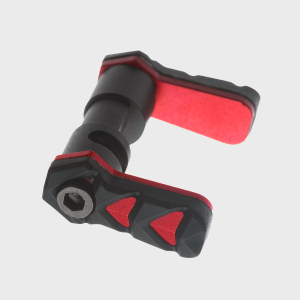
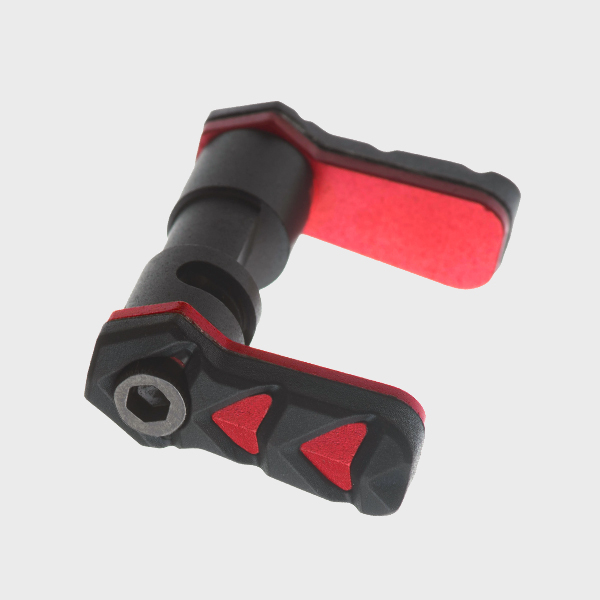
The Tyrant CNC Ambidextrous AR-15 Safety Selector gives owners the flexibility to configure the selector for either a 45-degree or traditional 90-degree throw. That makes the selector useful for different hand sizes, grip angles, and control preferences, but throw angle should not be considered independently from detent resistance. A short throw with poor tactile definition is not automatically better than a longer throw, and an extremely stiff selector is not automatically safer. The objective is a compatible, positively engaging control that feels predictable from either side of the receiver.
What Safety Selector Throw Actually Means
Selector throw describes the amount of rotation between the selector's operating positions. Traditional AR-15 selectors generally use approximately 90 degrees of movement between SAFE and FIRE, while short-throw designs reduce that rotational distance.
Traditional 90-Degree Throw
A 90-degree selector uses the familiar quarter-turn movement found on conventional AR-15 configurations. The larger arc creates a substantial physical difference between the two selector positions.
45-Degree Short Throw
A 45-degree configuration reduces the rotational movement roughly by half. For some hand positions, that shorter arc allows the thumb to manipulate the selector with less movement away from its natural position.
Throw Angle Is Primarily an Ergonomic Choice
A shorter selector path does not automatically make every rifle better. The correct choice depends on compatible receiver geometry, hand size, grip position, familiarity, and the selector manufacturer's requirements.
Why the Tyrant Ambidextrous Selector Offers 45 and 90 Degree Options
Different shooters prefer different selector movement, which is why a configurable design can be useful. Tyrant's ambidextrous selector can be set up for either 45-degree or 90-degree operation rather than forcing every owner into one control pattern.
45 Degrees Reduces Thumb Travel
The shorter movement can complement a high firing-hand position or a more vertical AR grip where the thumb naturally remains close to the selector.
90 Degrees Preserves Traditional Operation
Owners accustomed to conventional AR controls may prefer the familiar quarter-turn movement and the obvious positional difference it provides.
One Is Not Universally Superior
The benefit comes from selecting the configuration that works naturally with the individual shooter and compatible lower receiver rather than choosing the shortest possible throw simply because it is available.
Detent Resistance Is the Other Half of Selector Feel
Throw angle determines distance, but it does not completely determine how a selector feels. The selector detent and spring interact with the selector body to provide resistance and help define the SAFE and FIRE positions.
The Detent Creates Positional Feedback
As the selector rotates, the detent follows the geometry built into the selector. Proper interaction helps create the distinct tactile transition associated with each position.
The Spring Maintains Detent Pressure
The spring provides pressure that keeps the detent engaged with the selector. That pressure contributes directly to the resistance felt at the lever.
Resistance Should Feel Deliberate
The objective is not the lightest possible selector. A safety control should provide clear, predictable engagement rather than feeling vague or moving without sufficient tactile definition.
Why Excessively Heavy Detent Resistance Is Not Ideal
A selector that requires unusually high force can interfere with otherwise natural control manipulation.
Heavy Resistance Can Encourage Grip Movement
If significant thumb force is required, the shooter may need to change hand position simply to operate the selector.
Binding Can Feel Like Strong Detent Pressure
Not every stiff selector is caused by a strong spring. Receiver tolerances, component alignment, selector geometry, grip installation, debris, or incompatible parts can also create resistance.
More Resistance Does Not Automatically Mean More Positive Engagement
A properly engineered selector should provide distinct positions through correct geometry and detent interaction rather than relying on excessive operating force.
A Selector Can Also Be Too Light
Reducing resistance as much as possible is not a useful tuning objective for a safety control.
Weak Feedback Makes Position Less Obvious
If the detent interaction becomes too light, the tactile difference between positions can become less distinct.
Positive Engagement Is More Important Than Minimum Effort
The selector should move deliberately and remain positively located in its intended position.
Do Not Modify Safety Components Simply to Reduce Resistance
Cutting springs, reshaping detents, aggressively polishing engagement surfaces, or making other improvised modifications can change how the safety functions. A functional safety component should be kept within the specifications established by the component and receiver manufacturers.
How 45-Degree Throw Changes Perceived Resistance
A 45-degree selector may feel different even when the detent system itself has not been intentionally made lighter.
The Lever Travels Through a Shorter Arc
Because the rotational distance is reduced, the entire transition occurs over a smaller range of thumb movement.
Lever Geometry Influences Mechanical Feel
Lever length and shape affect the leverage available to the thumb. Two selectors with the same throw angle can therefore feel noticeably different.
Short Throw Does Not Require a Weak Detent
A properly designed 45-degree selector can maintain clear positional feedback while reducing the rotational distance between positions.
Why 90-Degree Selectors Can Feel More Deliberate
The traditional 90-degree selector provides a larger physical movement between SAFE and FIRE.
The Positions Are Visually Distinct
The lever's orientation changes substantially through the full quarter-turn.
The Longer Sweep Is Familiar
Owners with extensive experience on traditional AR-pattern rifles may prefer maintaining the same control movement across multiple rifles.
Familiarity Can Be More Valuable Than Reduced Travel
If a shooter already operates a 90-degree selector naturally without changing grip position, shortening the throw may provide little practical ergonomic improvement.
Grip Angle Changes Selector Ergonomics
The AR pistol grip determines where the firing hand and thumb sit relative to the selector. Changing the grip can therefore change which selector throw feels most natural.
More Vertical Grips
A relatively vertical grip can position the wrist and thumb differently from a traditional swept-back grip. A short-throw selector may complement this position because the thumb remains closer to the control throughout the reduced arc.
Traditional Angled Grips
A conventional grip angle often pairs naturally with the familiar 90-degree selector movement, particularly for shooters already accustomed to that combination.
Evaluate the Complete Lower Receiver
Grip angle, grip thickness, hand size, selector lever geometry, and throw angle should be considered together rather than treating each component as an isolated upgrade.
Hand Size Can Influence the Best Throw Angle
Two shooters using the same rifle can have very different experiences with the same selector.
Smaller Hands
A shooter with shorter thumbs may find that a 45-degree selector requires less stretching or hand repositioning.
Medium Hands
Either configuration may work comfortably, making lever profile and existing training habits more important factors.
Larger Hands
A longer thumb may operate a traditional 90-degree selector without difficulty, although a short throw can still be preferred for its compact movement.
Why Ambidextrous Lever Geometry Matters
Adding a second lever makes the selector accessible from both sides of the receiver, but it also introduces another contact surface around the firing hand.
Right-Handed Shooters Gain a Secondary Control Surface
An ambidextrous selector allows the control to be accessed from either side rather than depending entirely on the traditional left-side lever.
Left-Handed Shooters Gain More Natural Access
Ambidextrous controls are particularly useful when a conventional single-sided selector would otherwise require awkward manipulation.
Secondary-Lever Contact Should Be Considered
Depending on hand size and grip position, the opposite-side lever can contact the trigger finger or hand. Lever shape is therefore just as important as the fact that the selector is ambidextrous.
Lever Length Changes Perceived Selector Effort
The selector lever acts as a small mechanical lever, so its dimensions influence how much thumb force feels necessary.
A Longer Lever Provides More Leverage
Additional distance from the selector's rotational center can make the same detent resistance feel easier to overcome.
A Shorter Lever Can Feel More Compact
A shorter secondary lever may reduce unwanted hand contact but can also provide less leverage.
Texture Influences Thumb Purchase
Useful surface texture can improve contact without requiring the lever itself to become unnecessarily large.
Detent Resistance Should Be Consistent Through Repeated Use
A selector should not feel crisp during one movement and rough or unpredictable during the next.
Consistency Helps Identify the Positions
Predictable tactile feedback makes it easier to recognize normal selector behavior.
Grinding Is Different From Positive Resistance
A deliberate click into position is not the same as scraping, sticking, or irregular resistance through the selector's travel.
Changes in Feel Deserve Inspection
If a selector becomes significantly heavier, lighter, rougher, or less distinct after previously operating normally, the lower receiver should be inspected before continued use.
The Detent and Spring Should Be Treated as Safety Components
Because these small components influence selector engagement, they should not be treated as generic tuning parts.
Correct Components Matter
Use parts intended for the applicable AR-15 safety-selector system rather than substituting springs or detents based only on similar dimensions.
Spring Modification Is Not a Shortcut
Shortening a spring to make a stiff selector easier to move can reduce the pressure that maintains detent engagement.
Resolve the Cause of Abnormal Resistance
If a selector is unusually stiff, determine whether the problem involves compatibility, alignment, component condition, or installation rather than immediately altering the detent system.
Receiver Compatibility Matters With a 45-Degree Selector
A short-throw selector should never be assumed to work correctly with every AR-pattern lower simply because the selector shaft physically fits into the receiver.
Short-Throw Geometry Is Different
The selector's operating positions and internal engagement geometry are engineered around the intended throw.
Follow Tyrant Fitment Requirements
Use the selector only with lower receiver and fire-control configurations identified as compatible with the product.
Do Not Modify a Receiver to Force Compatibility
A safety component that does not function correctly in a particular lower should not be made to fit through improvised machining or modification.
Why Positive Engagement Matters More Than Selector Speed
Marketing around short-throw selectors often emphasizes faster manipulation, but movement speed should not become the primary measure of a safety control.
The Selector Needs Clear Positions
The user should be able to identify a positive transition rather than encountering a vague middle area.
Short Travel Should Still Feel Deliberate
Reducing the throw angle should reduce rotational distance without turning the selector into an excessively light control.
Reliability Comes Before Ergonomic Preference
If a particular configuration does not provide correct safety operation with the lower receiver, it should not be used regardless of how comfortable the lever feels.
What Can Make an AR Safety Selector Feel Too Stiff?
Detent spring pressure is only one possible source of heavy operation.
Component Tolerance Stacking
The selector, receiver, detent, grip, and other lower components all have dimensional tolerances. A combination near the limits of those tolerances can change control feel.
Incorrect Component Alignment
If parts are not sitting as intended, friction can be introduced into the selector movement.
Debris or Surface Damage
Foreign material, damaged components, or abnormal wear can make an otherwise correct selector feel rough.
Grip-Related Spring Issues
On conventional AR-15 configurations, the grip interfaces with the selector detent spring. Problems involving that interface can affect how the selector feels and should be inspected rather than compensated for by altering the safety components.
What Can Make a Selector Feel Too Light?
An unusually light selector also deserves attention.
Insufficient Detent Pressure
A damaged, incorrect, or improperly supported spring can reduce the force maintaining detent engagement.
Damaged Detent Components
Wear or deformation can change how positively the selector locates into its positions.
Improper Modification
Removing material from selector engagement surfaces or modifying the spring can reduce tactile definition and should not be used as a casual tuning method.
45 Degree vs 90 Degree for a General-Purpose AR
A general-purpose rifle should prioritize predictable controls and compatibility over chasing the shortest possible selector movement.
Choose 45 Degrees for Compact Thumb Movement
A short throw can make sense when the firing-hand position naturally favors a smaller selector sweep.
Choose 90 Degrees for Familiarity
The traditional configuration remains a strong option for owners who already manipulate it comfortably or want consistency across several rifles.
Standardization Can Be Valuable
If several AR-15s are used regularly, keeping similar selector behavior across them can reduce unnecessary differences in control feel.
Ambidextrous Selectors Are Useful Beyond Left-Handed Shooting
Ambidextrous controls are often described primarily as a solution for left-handed shooters, but access from both sides can benefit a wider range of users.
Either Hand Can Reach a Control Surface
The rifle is not limited to one selector lever on one side of the receiver.
Handedness Does Not Determine the Entire Setup
Some right-handed shooters prefer using the secondary lever for certain administrative manipulations, while left-handed shooters may rely on it as their primary interface.
Lever Comfort Still Matters
Adding controls to both sides only provides an ergonomic advantage when the secondary lever does not create unwanted contact with the hand.
Do Not Tune Detent Resistance by Feel Alone
There is no universal target for making an AR safety selector feel as light or heavy as possible. The safety needs to operate correctly within the intended lower-receiver system.
A Crisp Selector Is Not Necessarily a Heavy Selector
Good tactile definition comes from correct geometry and component interaction rather than simply increasing spring force.
A Smooth Selector Is Not Necessarily a Light Selector
Smooth movement means the selector transitions without binding or grinding while still retaining positive engagement.
Function Determines Acceptability
If selector operation is abnormal or uncertain, the rifle should be inspected by a qualified armorer or gunsmith rather than adjusted through trial-and-error modifications to safety components.
Common Ambidextrous Safety Selector Mistakes
Most selector problems are easier to avoid when compatibility and ergonomics are considered before installation.
Choosing 45 Degrees Only Because It Is Shorter
Reduced travel is useful only when it complements the receiver, grip, hand position, and user preference.
Trying to Make the Detent Extremely Light
The safety needs positive engagement. Minimum resistance should never be the tuning objective.
Cutting the Detent Spring
Changing spring length can alter detent pressure and safety-selector behavior. Use the correct components instead of modifying safety-system parts to change feel.
Ignoring the Opposite-Side Lever
An ambidextrous selector should be evaluated from both sides. A lever that works well under one thumb can still create uncomfortable contact on the opposite side.
Ignoring Grip Geometry
A selector that feels awkward may be interacting with a grip angle or hand position that does not complement its lever geometry.
Assuming Every AR Lower Supports Every Short Throw
Short-throw compatibility should always be confirmed rather than inferred from general AR-15 compatibility.
What to Evaluate Before Choosing 45 or 90 Degrees
The best configuration becomes clearer when the entire lower receiver is considered as one ergonomic system.
Receiver Compatibility
Confirm that the intended throw configuration is supported by the lower receiver and selector manufacturer.
Grip Angle
Determine where the grip naturally places the firing-hand thumb relative to the selector.
Hand Size
Consider whether the traditional sweep requires stretching or repositioning the hand.
Lever Profile
Look at lever length, contour, texture, and the shape of the secondary ambidextrous control.
Existing Training Habits
An owner already comfortable with a 90-degree selector may value consistency more than shorter movement.
Detent Feel
The selector should provide clear, repeatable positional feedback without unusual binding or excessive looseness.
When to Have the Selector System Inspected
Because the selector is a safety component, abnormal operation should be addressed rather than accepted as an ergonomic quirk.
The Selector Does Not Engage Positively
Vague or incomplete engagement is a reason to stop and inspect the system.
The Selector Becomes Significantly Stiffer
A sudden change in resistance can indicate an installation, component, contamination, or compatibility issue.
The Selector Moves Unusually Easily
A loss of expected detent resistance should also be investigated.
The Lever Rubs or Binds Against the Receiver
External interference should be corrected rather than overcome by applying more force.
There Is Any Uncertainty About Safety Operation
A qualified armorer or gunsmith should inspect the rifle before it is returned to use.
Did You Know?
The Tyrant CNC Ambidextrous AR-15 Safety Selector can be configured for either a 45-degree or traditional 90-degree throw, allowing the same control concept to accommodate different grip positions, hand sizes, and selector preferences.
Conclusion
Optimizing an AR-15 safety selector is not about making the throw as short or the detent as light as possible. The better objective is predictable, positive engagement that works naturally with the shooter's hand, grip, lower receiver, and existing control habits. A 45-degree configuration can reduce thumb travel and pair well with modern grip positions, while a 90-degree configuration maintains the traditional AR control pattern and a larger positional sweep. Detent resistance should remain deliberate and consistent rather than being altered through improvised spring or component modifications. With an ambidextrous design, opposite-side lever comfort should also be evaluated as part of the complete setup. To explore the compatible control options, visit Tyrant CNC AR-15 safety selectors.
FAQs
Can the Tyrant CNC Ambidextrous AR-15 Safety Selector use both 45-degree and 90-degree throws?
Yes. Tyrant's selector is designed to support either a 45-degree or traditional 90-degree configuration, allowing the owner to choose the compatible setup that best matches their preferred control feel.
Is a 45-degree AR-15 safety selector better than a 90-degree selector?
Not universally. A 45-degree selector reduces rotational travel, while a 90-degree selector provides traditional operation and a larger physical movement between positions. Hand size, grip angle, receiver compatibility, and familiarity should determine the choice.
What creates the resistance felt when moving an AR-15 safety selector?
The selector detent and its spring contribute significantly to the tactile resistance and positional feedback. Selector geometry, lever dimensions, receiver tolerances, component alignment, and grip-related factors can also influence how the control feels.
Should I shorten the selector detent spring if the safety feels too stiff?
No. Modifying the spring simply to reduce resistance can change the behavior of a safety component. Unusual stiffness should be diagnosed for compatibility, alignment, component condition, or installation issues rather than corrected by casually altering the detent system.
Why can the opposite lever on an ambidextrous selector feel uncomfortable?
Depending on hand size and grip position, the secondary lever can contact the trigger finger or another part of the firing hand. Lever length, contour, grip angle, and throw configuration all influence that interaction, so the selector should be evaluated as part of the complete lower-receiver setup.