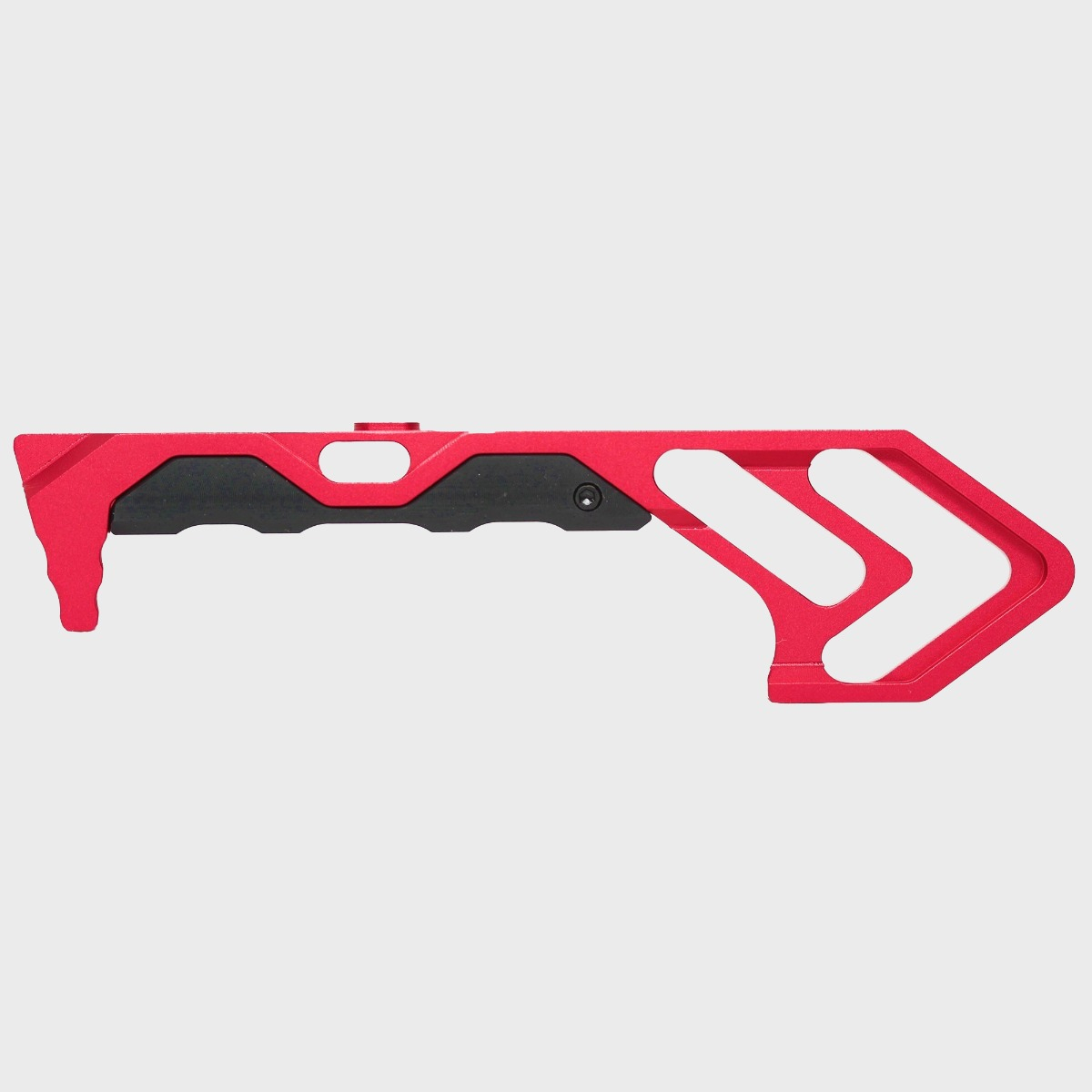
Most shooters focus on what foregrip or handstop they use, but positioning matters far more than the accessory itself. Even a high-quality handstop becomes ineffective if it’s mounted in the wrong location. Proper placement changes leverage, recoil tracking, wrist angle, and how efficiently force transfers through the support arm.
Understanding where your handstop works best helps create a setup that feels stable, repeatable, and easier to control during rapid fire.
Why Position Matters More Than Grip Style
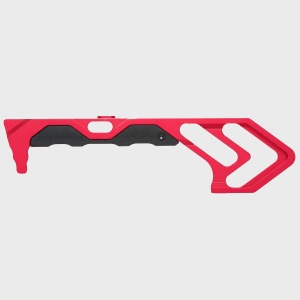
A handstop is not designed to “hold” the rifle the way a vertical grip does. Its main purpose is to create a consistent indexing point and improve leverage against recoil.
The farther forward the support hand reaches, the more control you gain over muzzle movement. However, positioning too far forward can create tension and fatigue, especially during long sessions.
The ideal location balances leverage with comfort and repeatability.
How Leverage Controls Recoil
Recoil management is largely about controlling rotational movement at the muzzle.
Forward Hand Placement
Moving the support hand farther toward the muzzle increases leverage against muzzle rise. This helps keep the rifle flatter during rapid strings of fire.
Rearward Placement
A handstop positioned too close to the receiver reduces leverage and makes recoil feel sharper and less predictable.
Small changes in placement can dramatically affect how the rifle tracks during transitions.
Where Most Shooters Position a Handstop Incorrectly
One of the most common mistakes is mounting the handstop based on appearance instead of biomechanics.
Too Far Back
This reduces support-arm engagement and limits recoil control. The rifle becomes more dependent on shoulder pressure rather than leverage.
Too Far Forward
Extremely stretched positioning creates arm fatigue and inconsistent pressure during extended use.
Ignoring Wrist Angle
An awkward wrist position reduces stability and causes inconsistent grip pressure during recoil.
The Best Starting Position
For most shooters, the ideal handstop location is near the point where the support arm can extend naturally without locking out completely.
This position typically allows:
- Natural wrist alignment
- Strong forward pressure
- Consistent support-hand indexing
- Reduced fatigue during long sessions
From there, small adjustments forward or backward can fine-tune the feel.
Handstop Position and Rifle Length
Rail length changes how aggressively a shooter can position the support hand.
Shorter Rails
Compact setups naturally limit extension, which often forces the handstop closer to the receiver.
Long Rails
Longer handguards allow greater flexibility for forward positioning and modern recoil-control techniques.
Neither is automatically better—the correct placement depends on body mechanics and intended use.
How Handstops Improve Consistency
Beyond recoil control, handstops improve consistency by creating repeatable positioning.
Repeatable Grip Placement
The support hand returns to the same location every time, improving consistency during presentation and transitions.
Pressure Control
A properly positioned handstop helps apply forward pressure evenly without over-gripping the rifle.
Heat Management
Handstops also prevent the support hand from drifting into hotter sections of the rail during extended firing.
Testing and Adjusting Position
The best setup is usually found through small adjustments rather than large changes.
Start Neutral
Begin with the handstop mounted slightly forward of center on the rail.
Evaluate Tracking
Watch how the muzzle returns during controlled pairs and rapid strings.
Adjust Incrementally
Move the handstop one slot at a time and test how recoil and fatigue change.
Minor adjustments often create major differences in feel and control.
Did You Know?
A handstop positioned only a few slots farther forward can noticeably reduce muzzle rise by increasing leverage through the support arm.
Conclusion: Position Creates Performance
Effective recoil control comes from leverage, consistency, and body mechanics—not just the accessory itself. A properly positioned handstop improves muzzle tracking, reduces fatigue, and creates a more repeatable shooting setup. For rail accessories designed around modern control techniques and ergonomic positioning, explore AR-15 foregrip upgrades built for stability and performance.
FAQs
Should a handstop be mounted as far forward as possible?
No, positioning too far forward can create unnecessary fatigue and inconsistent pressure.
Does handstop placement affect recoil control?
Yes, placement directly changes leverage and muzzle tracking.
What is the best wrist angle for a handstop?
A natural wrist position with slight forward pressure provides the best balance of comfort and control.
Are handstops better than vertical grips?
They serve different purposes, but handstops are often preferred for lightweight, modern control setups.
How do I find the ideal position?
Start neutral and adjust incrementally while testing recoil tracking and comfort.