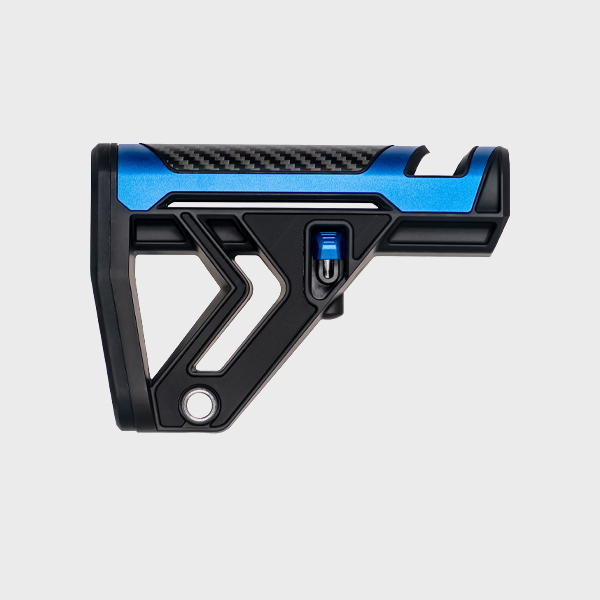
The cheek weld on an AR buttstock plays a crucial role in comfort and accuracy. When selecting an AR buttstock, one of the most overlooked factors is the material used for the cheek weld. Two popular choices are carbon fiber and polymer, each offering distinct advantages depending on the environment in which the rifle is used, especially in terms of temperature fluctuations.
This guide will compare the properties of carbon fiber and polymer cheek welds, focusing on how they perform in varying temperatures, and help you decide which material best suits your needs.
Carbon Fiber Cheek Welds: Lightweight Performance with Temperature Considerations
Carbon fiber is known for its light weight, high strength, and aesthetic appeal. It’s used in many high-performance applications, including firearms, due to its excellent durability and stiffness-to-weight ratio. However, when it comes to temperature swings, carbon fiber presents both advantages and challenges.
Advantages of Carbon Fiber Cheek Welds
-
Lightweight: Carbon fiber provides a very light cheek weld, which reduces overall weapon weight, contributing to a faster and more maneuverable rifle.
-
High Durability: Carbon fiber is incredibly durable and resistant to impact, making it ideal for rugged use.
-
Stiffness: It offers a stiff feel, which helps maintain a consistent weld position for better accuracy.
Challenges with Carbon Fiber in Extreme Temperatures
-
Cold Temperature Conductivity: Carbon fiber can become very cold to the touch in low temperatures. This can make the cheek weld uncomfortable, as the material draws heat away from your face, causing discomfort during long shooting sessions in cold weather.
-
Heat Sensitivity: Carbon fiber can become excessively warm in hot weather, causing discomfort against the skin, especially during prolonged use in high temperatures.
While carbon fiber is lightweight and strong, it may not be the best choice if you're frequently shooting in environments with extreme temperature swings. A protective cover can mitigate some discomfort, but it doesn't completely solve the temperature conductivity problem.
Polymer Cheek Welds: Temperature Insulation and Durability
Polymer, a widely used material in firearm manufacturing, provides a reliable and consistent cheek weld across a variety of environments. It’s less prone to temperature extremes compared to carbon fiber, making it a popular choice for all-weather shooting.
Advantages of Polymer Cheek Welds
-
Comfort in Extremes: Polymer doesn’t conduct temperature as easily as carbon fiber. It remains more neutral in cold or hot environments, providing a more consistent and comfortable cheek weld.
-
Durability: Polymer is impact-resistant and resilient, making it highly durable for harsh conditions.
-
Affordability: Polymer parts tend to be more cost-effective compared to carbon fiber, making it a popular choice for budget-conscious builds.
Limitations of Polymer Cheek Welds
-
Weight: While still lightweight, polymer tends to be heavier than carbon fiber. This can slightly affect the overall weight and balance of the rifle.
-
Flexibility: Some polymer cheek welds may exhibit more flex or give under pressure, especially if made from lower-grade materials, which can impact precision and consistency.
Polymer offers a more comfortable and consistent cheek weld across a wide range of temperatures, making it an ideal choice for shooters who need reliable performance in varying environments.
Temperature Stability: Which Material Performs Best?
When considering temperature swings, the ability of a material to maintain comfort and performance is critical. Here's how the two materials compare:
|
Property |
Carbon Fiber |
Polymer |
|---|---|---|
|
Cold Weather Comfort |
Cold to the touch, uncomfortable |
Retains warmth, comfortable |
|
Hot Weather Comfort |
Can get uncomfortably warm |
More neutral, remains comfortable |
|
Overall Temperature Insulation |
Poor insulation, conducts heat and cold |
Good insulation, less affected by temperature |
Based on temperature performance alone, polymer is the clear winner for all-weather shooters, providing consistent comfort regardless of environmental conditions.
Did You Know?
Many polymer cheek welds come with textured surfaces, which can help improve your grip and control while maintaining comfort during extreme temperature fluctuations.
Conclusion
When choosing between a carbon fiber and polymer cheek weld, it’s important to weigh the pros and cons of each material based on your shooting environment. For all-weather reliability and comfort, polymer offers a versatile solution. However, if weight reduction and strength are your primary goals, carbon fiber may still be the ideal choice—just be prepared for the temperature changes that come with it. For high-quality AR accessories and upgrades, check out our selection of AR-15 buttstocks designed to meet your performance needs in any environment.
FAQs
Is carbon fiber the best material for all AR buttstocks?
Carbon fiber is ideal for reducing weight and increasing strength, but it may not be the best choice in extreme temperatures.
Why is polymer better in temperature swings?
Polymer doesn’t conduct temperature as much as carbon fiber, offering a more comfortable cheek weld in both hot and cold environments.
Does polymer affect shooting performance?
Polymer typically offers a reliable, comfortable grip, but it may add slight weight compared to carbon fiber. It generally doesn’t affect accuracy.
Can I use a polymer cheek weld in cold weather?
Yes, polymer remains more comfortable in cold temperatures compared to carbon fiber, which can get very cold to the touch.
Is carbon fiber more durable than polymer?
While carbon fiber is incredibly durable, polymer is still highly resilient, and in many cases, it’s more impact-resistant, especially under harsh conditions.