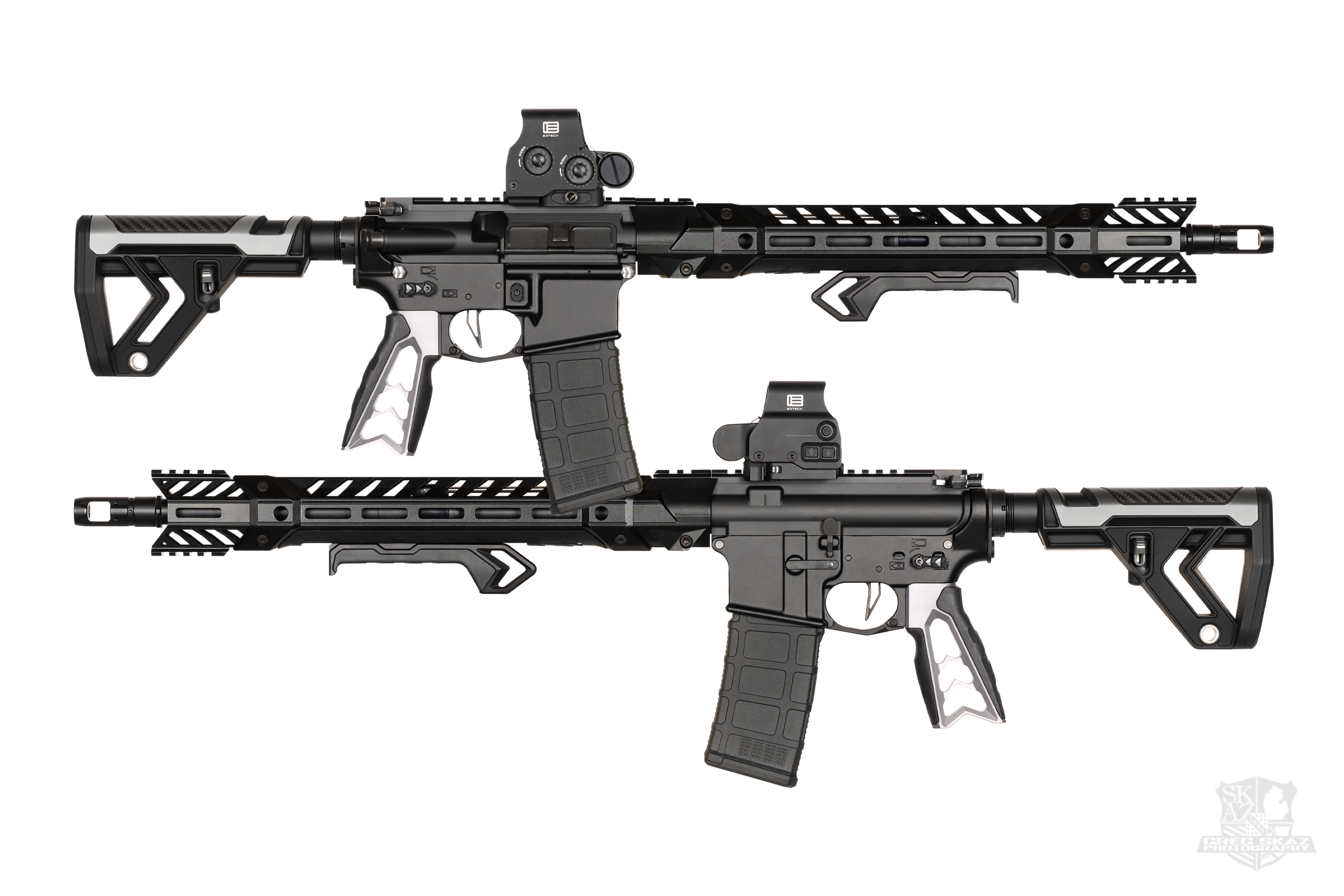
The safety selector is an essential part of your AR-15, providing the ability to safely engage and disengage the firing mechanism. While the standard safety selector works fine for many users, upgrading to an ambidextrous safety selector can significantly enhance the versatility and ease of use, especially in tactical shooting scenarios. This article explores the differences between ambidextrous and standard safety selectors, and how each can improve your AR-15’s performance.
What is a Safety Selector and Why is it Important?
A safety selector is a lever on your AR-15 that allows the shooter to engage or disengage the firing mechanism. The selector has two primary positions:
-
Safe: The firearm is disabled and cannot fire.
-
Fire: The firearm is enabled and ready to fire.
The safety selector ensures safe handling of the rifle, preventing accidental discharges. The type of safety selector you choose affects not only safety but also speed and efficiency, particularly in high-stress, tactical situations.
Standard vs. Ambidextrous Safety Selectors
1. Standard Safety Selector
A standard safety selector is the most common type, and it’s typically found on most factory-built AR-15 rifles. The standard safety selector is designed for right-handed shooters, with a single lever on the right side of the rifle. To switch the safety on and off, the shooter must use their right thumb or hand.
Pros of Standard Safety Selector:
-
Simple and Affordable: Standard safety selectors are usually less expensive and simpler in design, making them a cost-effective option for those who don't require advanced features.
-
Reliable: The standard selector is generally very reliable and durable, as it has fewer moving parts.
-
Lightweight: Due to its simple design, the standard selector doesn’t add extra weight to your rifle.
Cons of Standard Safety Selector:
-
Limited for Left-Handed Shooters: Left-handed shooters may find the standard safety selector less convenient, as it requires reaching across the rifle to switch the safety.
-
Slower Operation in Tactical Situations: In fast-paced tactical shooting situations, the standard selector may be slower to operate compared to ambidextrous models.
2. Ambidextrous Safety Selector
An ambidextrous safety selector offers the same functionality as the standard selector but with an important distinction: it can be operated from either side of the rifle. With levers or paddles on both sides of the rifle, it allows shooters to engage or disengage the safety regardless of their dominant hand.
Pros of Ambidextrous Safety Selector:
-
Faster Operation: Ambidextrous safety selectors allow for quicker engagement and disengagement, which is critical in tactical scenarios where speed matters.
-
Ideal for Left-Handed Shooters: Left-handed shooters benefit significantly from ambidextrous selectors, as they can operate the safety lever from their dominant side without reaching over the rifle.
-
More Versatile: Ambidextrous selectors can be used by both right- and left-handed shooters, making them a more versatile option for those who share the rifle with others.
Cons of Ambidextrous Safety Selector:
-
Costlier: Ambidextrous safety selectors are typically more expensive due to their added functionality.
-
May Increase Weight: While the additional weight is minimal, some shooters prefer the lighter weight of a standard selector.
Did you know?
Upgrading to an ambidextrous safety selector can reduce the time it takes to engage or disengage the safety by as much as 30%, improving your overall tactical efficiency.
Conclusion: Which Safety Selector is Right for You?
Choosing between an ambidextrous and a standard safety selector depends on your specific shooting needs. If you are a right-handed shooter and don’t require a high-speed, versatile solution, the standard safety selector will likely suit you just fine. However, if you’re a left-handed shooter or someone who frequently needs to switch between different shooting positions, an ambidextrous selector may provide significant benefits in both speed and comfort.
To elevate your AR-15's performance, explore our selection of high-quality AR-15 components designed for better reliability and efficiency.
FAQs
1. How do I know if a safety selector will fit my AR-15?
Make sure to check the specifications of both your AR-15 model and the safety selector. Most selectors are compatible with standard AR-15 setups, but always verify compatibility before purchasing.
2. Can I install an ambidextrous safety selector myself?
Yes, most ambidextrous safety selectors are designed for easy installation. However, be sure to follow the manufacturer’s instructions carefully and ensure the parts are properly secured.
3. Does an ambidextrous safety selector make the rifle heavier?
An ambidextrous selector may add a small amount of weight, but the difference is generally minimal and will not significantly affect the rifle's handling.
4. Is the ambidextrous safety selector more expensive than the standard one?
Yes, ambidextrous safety selectors are typically more expensive due to their additional functionality, but many shooters find the price worth the benefits.
5. How often should I check my safety selector for wear?
Inspect your safety selector periodically for signs of wear or malfunction. If you notice any issues with engagement or disengagement, it's important to replace the selector promptly to ensure safe operation.