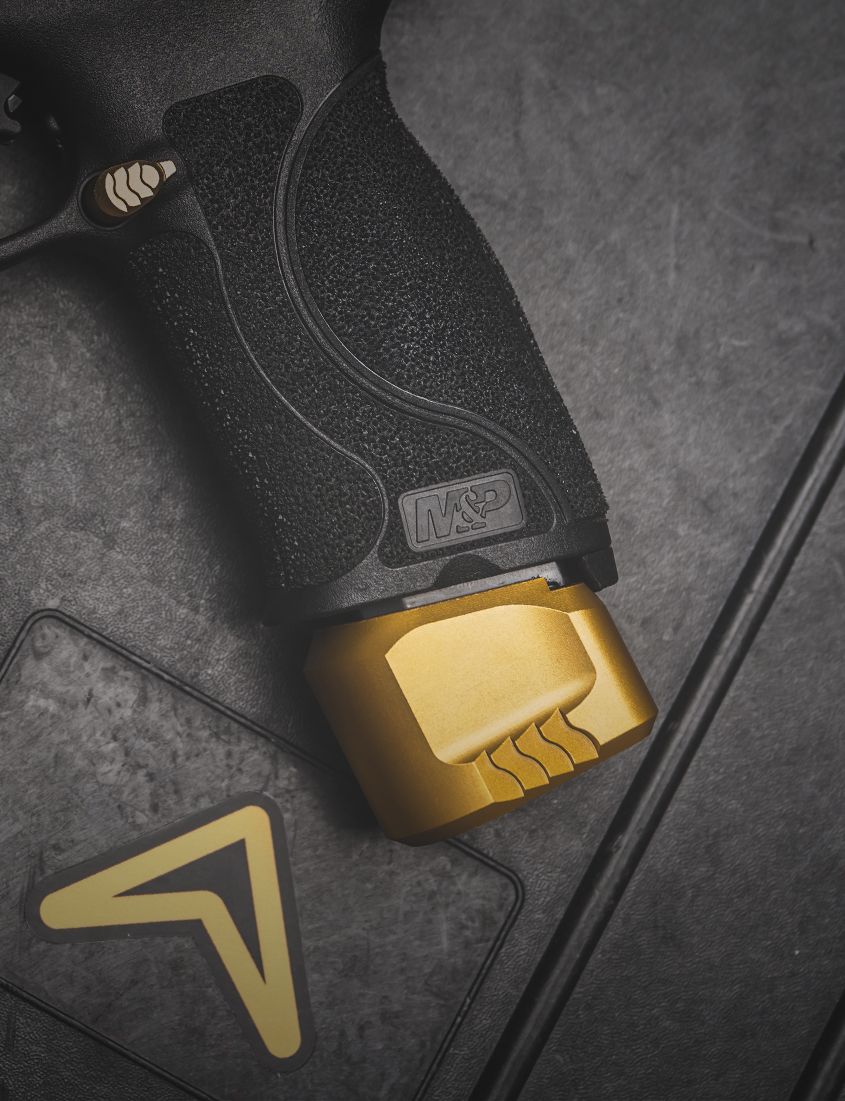
Adding a magazine extension is an obvious way to get extra rounds and improved indexable grip - but longer grip length changes how a pistol sits under clothing. This article looks at the trade-offs with an engineering-first lens: how much grip length matters, the mechanical benefits of extensions, concealment impacts (printing and cant), holster and reholster considerations, and a practical test checklist so you can choose the smallest, most reliable extension that meets your carry goals.
Why add a magazine extension?
Extensions buy two clear, measurable advantages: increased capacity (rounds on hand) and additional purchase below the frame to aid index, reloads, and recoil control. For many concealed-carry setups, the extra index improves speed and control without dramatically changing sight picture or balance - if the extension is chosen and fitted with the carry mission in mind.
How extra grip length affects concealment
Grip length interacts with concealment two ways: printing and ride height. Printing is the visible outline of the firearm through clothing; ride height is how high the pistol sits relative to the waistline or appendix pocket.
-
Printing: Longer grips push material outward and increase the chance of an obvious edge or shadow. The effect is highly dependent on clothing stretch, fabric thickness, and carry location.
-
Ride height and cant: Extensions that add length at the base can force the pistol to sit higher or change its cant in a holster. A small change in angle (5-10°) can make printing much more or less apparent.
Design choices that minimize print while keeping grip
Not all extensions are created equal. Design and material decisions determine how intrusive an extension feels and looks under clothing:
-
Low-profile extensions: Short, thin baseplates that add 1-2 rounds of capacity often provide the best trade-off - improved purchase with minimal increase in visible profile.
-
Flared or hooked extensions: These improve positive purchase and faster reloads but increase the vertical profile and can catch on clothing during draw or reholster.
-
Material & finish: Smooth, matte finishes slide inside holsters and clothing more easily; aggressive texturing increases grip but raises snag and print risk.
-
Rounded geometry: Filleted edges reduce harsh shadow lines under thin fabrics compared with squared-off floorplates.
Holster and carry posture considerations
A magazine extension changes how the holster must cradle the pistol and how the rig rides on the body.
-
Holster cut: Choose a holster explicitly cut for your extension profile or one with adjustable mouth geometry. Generic holsters that compress the extension increase printing and reholstering difficulty.
-
Carry position: Appendix (AIWB) often masks small extensions better than strong-side carry for certain builds, but it changes draw angle and reholster safety. Test both positions with your clothing system.
-
Cant & tuck: Slight forward cant (10-15°) can reduce printing by aligning the grip with body lines. Tucking a shirt or choosing heavier outerwear also alters visibility - but the objective test is how it looks in everyday movement, not a static mirror check.
Practical test checklist - validate before you carry
-
Fit test (holster): Insert the pistol into your chosen holster with the extension installed. Draw and reholster slowly to confirm uninterrupted motion and safe muzzle path.
-
Clothing motion test: Walk, sit, and bend while wearing typical carry clothes. Check for visible edges or shadows under normal lighting and while moving. Repeat with different shirts and jackets you actually wear.
-
Concealment camera check: Use a phone camera at arm’s length and at natural angles to see what shows during routine movement - record and compare extension options side-by-side.
-
Live-fire handling: Test 100-200 rounds with the extension installed to validate magazine release operation, floorplate retention, and feeding. Swap between magazines and verify no hangups or interference with the magwell/extension interface.
-
Reholster repetition: Practice at least 200 dry draws and 50 live-fire reholsters (range-safe) to build muscle memory with the new geometry before trusting it for daily carry.
Failure modes and mitigation
-
Snagging on clothing: Choose rounded, low-profile baseplates or change to a holster with a larger mouth radius to prevent catching.
-
Magazine release interference: Ensure the extension doesn’t block or misalign with the mag catch; some designs require a mag catch adjustment or a slightly longer mag catch spring to ensure positive lockup.
-
Loosening floorplate: Inspect and torque any set screws or retention pins periodically - floorplate migration is a low-frequency but field-critical failure.
Did you know?
Adding just 6-10 mm of grip length below the frame often provides a sharp increase in index and reload speed while producing only a marginal increase in printing - if the extension uses a rounded, low-profile shape and the holster is cut correctly. The geometry and finish matter more than raw length alone.
Conclusion - match size to mission, validate by test
Magazine extensions are a highly useful tool when selected for purpose. For concealed carry, favor the smallest extension that delivers the control you need; prioritize rounded profiles, low vertical increase, and holster compatibility. Always validate with holster, clothing, and range tests - real-world movement and reholstering practice reveal the true trade-offs. When in doubt, prototype with removable/low-profile baseplates before committing to larger, more aggressive extensions.
Explore low-profile magazine extensions and compatible floorplates: magazine extensions.
FAQs
1. Will any extension make my pistol print more?
Not inherently. Design and holster fit determine printing more than absolute length. A short, rounded extension in a properly cut holster often prints less than a taller, squared-off baseplate that sits lower in the waistband.
2. How much length is too much for concealment?
There’s no universal number - most carry builds keep extensions under ~12-15 mm of additional exposed length. Above that, expect a noticeable change in ride height and a higher chance of printing unless clothing or carry position compensates.
3. Do magazine extensions affect feeding or reliability?
Properly designed extensions do not affect feeding. Failures usually come from loose floorplates, improper installation, or incompatible magazine bodies. Always validate magazines in live-fire tests after installing an extension.
4. Should I change my holster after adding an extension?
Yes - test the existing holster carefully. Many holsters will work with short extensions, but larger or flared designs often require a holster explicitly cut for the new profile to maintain safe draw and reholster paths.
5. What’s the best first modification for better index without increasing print?
Start with a short, low-profile baseplate that adds 1-2 rounds’ worth of length or a lightly flared polymer extension. These typically improve purchase with minimal effect on concealment and are reversible if the fit isn't ideal.