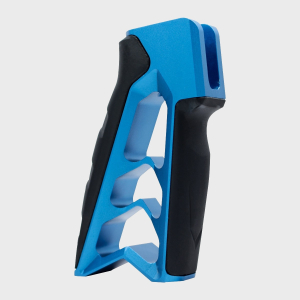
The pistol grip is one of the most personal parts of an AR-15 because it directly affects wrist position, trigger reach, firing-hand pressure, and overall comfort. Two of the most common grip styles are traditional angled grips and more vertical designs. Both can work well, but they support different shooting positions and build priorities.
The best AR-15 grip angle depends on how the rifle is configured and how you naturally position your firing hand. A compact defensive build, a general-purpose carbine, and a precision-oriented rifle may all benefit from different grip geometry. Understanding how vertical and angled grips change wrist alignment helps you choose a setup that feels natural rather than simply following current trends.

What Grip Angle Changes on an AR-15
Grip angle determines how far the firing hand is rotated backward when the rifle is shouldered. That directly influences wrist bend, trigger-finger position, and how much muscular tension is required to maintain the grip.
Wrist Position
A more vertical grip generally keeps the wrist straighter when the rifle is held close to the body. A more traditional angled grip rotates the wrist farther rearward.
Trigger Reach
Grip geometry can move the hand slightly forward or backward relative to the trigger. Shooters with different hand sizes may therefore experience the same grip very differently.
Firing-Hand Pressure
The angle also changes how naturally the firing hand can apply rearward pressure into the rifle without creating unnecessary wrist tension.
What Is a Vertical AR-15 Grip?
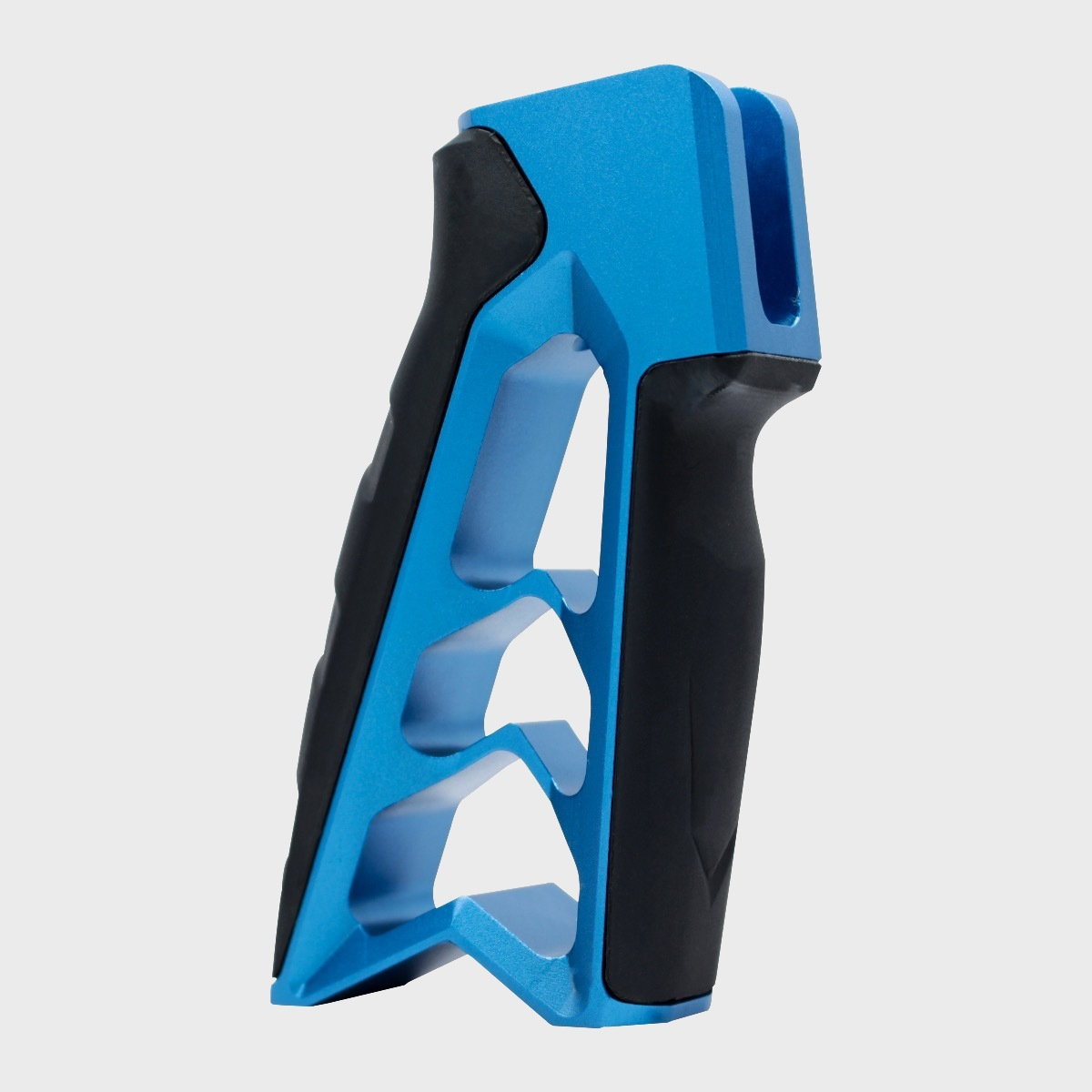
A vertical AR grip uses a steeper orientation that places the hand closer to an upright position beneath the lower receiver. Modern vertical-style grips have become especially popular on compact and defensive-oriented AR builds.
More Neutral Wrist Position
The main ergonomic advantage is reduced wrist bend. When the stock is relatively short and the shooter uses a squared stance, a vertical grip can allow the hand to sit more naturally.
Useful on Shorter Setups
Compact rifles often place the firing hand closer to the torso. In this position, a traditional swept-back grip can force the wrist into a more aggressive angle than some shooters find comfortable.
Modern Control Access
A vertical grip can also complement modern ambidextrous controls and short-throw safety selectors by positioning the thumb closer to the receiver.
What Is a Traditional Angled Grip?
A traditional AR grip uses a more rearward sweep, similar to the geometry commonly associated with classic AR-15 and M16 configurations.
Comfort With Longer Stock Positions
When the rifle is shouldered with more stock extension, the firing hand naturally sits farther from the body. A more angled grip can feel comfortable in this position because the wrist is not forced as sharply upward.
Familiar Feel
Shooters who have extensive experience with traditional AR configurations may prefer the familiar wrist and hand position of an angled grip.
Useful for Deliberate Shooting Positions
Some shooters prefer additional grip angle when firing from supported, seated, or slower precision-oriented positions where the rifle is not held tightly against a squared torso.
Vertical Grips for Compact AR Builds
Short carbines and compact AR configurations often benefit most clearly from a steeper grip angle.
Short Length of Pull Changes the Wrist
With the stock positioned closer to the receiver, the firing elbow and hand move forward. A vertical grip can reduce the amount of wrist bend required to maintain a solid grip.
Better Fit With Squared Stances
Modern defensive shooting positions often place the shoulders more squarely toward the target. A more vertical grip generally complements this body position better than an aggressively swept-back design.
Less Fatigue During Repeated Drills
A neutral wrist position can feel more comfortable during extended training, particularly when the rifle is repeatedly mounted and manipulated from compressed positions.
Angled Grips for Traditional Carbine Builds
A general-purpose carbine does not automatically require a vertical grip. Traditional or moderately angled designs can still provide excellent ergonomics when the stock length and shooting position support them.
Balanced Positioning
A moderately angled grip can provide a comfortable compromise for rifles used from standing, kneeling, supported, and prone positions.
Good Match for Longer Stocks
If you normally run the stock farther out, a traditional grip angle may align the wrist naturally without creating excessive tension.
Familiarity Can Matter More Than Trend
If you already manipulate the rifle confidently with a traditional grip, moving to an extreme vertical angle may provide little practical benefit.
Grip Angle for Precision-Oriented ARs
Precision-focused AR builds often use different body mechanics from compact defensive rifles. The shooter may spend more time prone, seated, or behind support equipment.
More Relaxed Hand Position
A moderately angled grip can feel natural when the rifle is positioned farther forward and the firing elbow is not tucked tightly against the body.
Trigger-Finger Alignment
Precision shooters may prioritize consistent trigger-finger placement over aggressive weapon manipulation. Grip thickness and angle should support a straight, repeatable trigger press.
Vertical Can Still Work
Some precision-oriented grips use very steep geometry because it allows the hand to remain relaxed behind the trigger. The correct choice depends on the stock position and how the shooter supports the rifle.
How Stock Position Changes the Best Grip Angle
Grip angle should never be evaluated independently from stock length. The two components directly affect one another.
Collapsed or Short Stock
A shorter stock brings the firing hand closer to the body and generally increases the appeal of a more vertical grip.
Extended Stock
A longer stock moves the firing hand farther forward relative to the shoulder, allowing a more traditional angled grip to feel natural for many shooters.
Test the Complete Setup
Before deciding that a grip is uncomfortable, adjust the stock to your actual shooting position. A grip that feels awkward with one stock setting may feel completely different with another.
Hand Size and Trigger Reach Matter
Two shooters using the same rifle can prefer completely different grips because of hand size and finger length.
Smaller Hands
A grip that positions the hand slightly closer to the trigger may improve trigger reach and access to the safety selector.
Larger Hands
Shooters with larger hands may prefer additional grip thickness or a shape that fills the palm while still allowing natural trigger-finger placement.
Angle Is Only Part of the Equation
Grip width, backstrap shape, texture, and beavertail design can influence ergonomics as much as the advertised grip angle itself.
Safety Selector Access Can Change With Grip Angle
The firing-hand thumb sits in a different position depending on the grip. That can influence how easily the safety selector is manipulated.
Vertical Grip and Short-Throw Selector
A more vertical hand position can pair naturally with a 45-degree selector because the thumb remains close to the control throughout the shorter sweep.
Traditional Grip and 90-Degree Selector
A more angled grip often feels familiar with the standard 90-degree selector because the thumb follows the traditional AR control path.
Choose Controls as a System
Grip angle and selector geometry should complement each other. If you are already planning to change both components, consider how the finished lower receiver will feel rather than evaluating each part separately.
Texture and Material Still Matter
A grip can have the perfect angle and still feel wrong if the texture or material does not suit the shooter.
Aggressive Texture
More aggressive surfaces can improve traction during wet or high-intensity training but may feel less comfortable during extended administrative handling.
Softer or Overmolded Surfaces
Rubberized or overmolded grips can increase comfort but may feel less precise to shooters who prefer a rigid interface.
Hard Polymer or Aluminum
Rigid materials provide a direct feel and consistent geometry. Shooters who prioritize a solid interface may prefer these designs over softer surfaces.
Vertical vs Angled for a General-Purpose AR
For a rifle expected to handle multiple roles, extreme geometry may not be necessary. A moderately vertical grip often provides a useful middle ground between traditional AR ergonomics and modern compact-rifle positioning.
Look for Neutral Wrist Alignment
The best grip should allow the wrist to remain comfortable through the positions you actually use most often.
Prioritize Repeatability
If the hand naturally returns to the same position every time the rifle is shouldered, the grip is doing its job.
Don't Choose Based Only on Appearance
Grip angle is an ergonomic choice. A design that looks appropriate for a particular build may still feel wrong once the rifle is actually shouldered.
How to Choose the Right Grip for Your Build
Start by identifying the rifle's primary role and the stock position you normally use. Then evaluate how your wrist feels when the rifle is mounted naturally.
Choose More Vertical If
Your rifle uses a shorter stock position, you shoot from a squared stance, or a traditional grip creates noticeable wrist bend.
Choose More Angled If
You run a longer stock position, prefer traditional AR ergonomics, or spend more time in supported and deliberate shooting positions.
Choose a Moderate Angle If
You want one rifle to work comfortably across a wide variety of positions without committing to either extreme.
Did You Know?
The ideal AR-15 grip angle can change simply by adjusting stock length because stock position changes where the firing hand sits relative to the shoulder and directly affects wrist alignment.
Conclusion
Choosing between a vertical and angled AR-15 grip should be based on wrist position, stock length, hand size, and the role of the rifle rather than style alone. More vertical grips often work particularly well on compact builds with short stock positions and squared shooting stances, while traditional angled grips remain comfortable on longer carbines and setups used from more extended positions. Moderate grip angles can provide an excellent compromise for general-purpose rifles. Evaluate the grip as part of the complete lower-receiver setup, including your stock and safety-selector configuration, before making the final choice. To explore grip options designed for modern AR ergonomics, visit Tyrant CNC AR-15 grips.
FAQs
Are vertical AR-15 grips better for short rifles?
They often work well on compact builds because a shorter stock position brings the firing hand closer to the body, making a more neutral wrist angle useful.
Are angled AR grips outdated?
No. Traditional and moderately angled grips remain comfortable for many shooters, especially on rifles used with longer stock positions or more traditional shooting stances.
Does grip angle affect trigger reach?
Yes. Grip angle and overall grip shape influence where the firing hand sits relative to the trigger, which can affect finger placement and comfort.
Should I match my grip angle to my safety selector?
It can help. Grip geometry changes thumb position, so the grip and selector should be evaluated together to make sure the controls feel natural.
What grip angle is best for a general-purpose AR-15?
A moderate or moderately vertical grip often provides a useful balance because it can remain comfortable across standing, kneeling, supported, and other common shooting positions.